TCL 75" QM6K vs TCL 75" QM8K: Which Is Better in 2026?
TCL's own internal battle at 75": the entry-level Mini-LED against the flagship. Same brand, same screen size, very different price points. The QM8K is roughly double the price than the QM6K. Same 75 inches — but the QM8K packs flagship tech: Halo Control, 165Hz, and 2500 nits.
Verdict: The TCL 75" QM6K is the better buy for 80% of people. It delivers excellent Mini-LED at 75" for under $800. The TCL 75" QM8K is for enthusiasts who demand the best possible Mini-LED performance and are willing to pay a flagship premium for it.
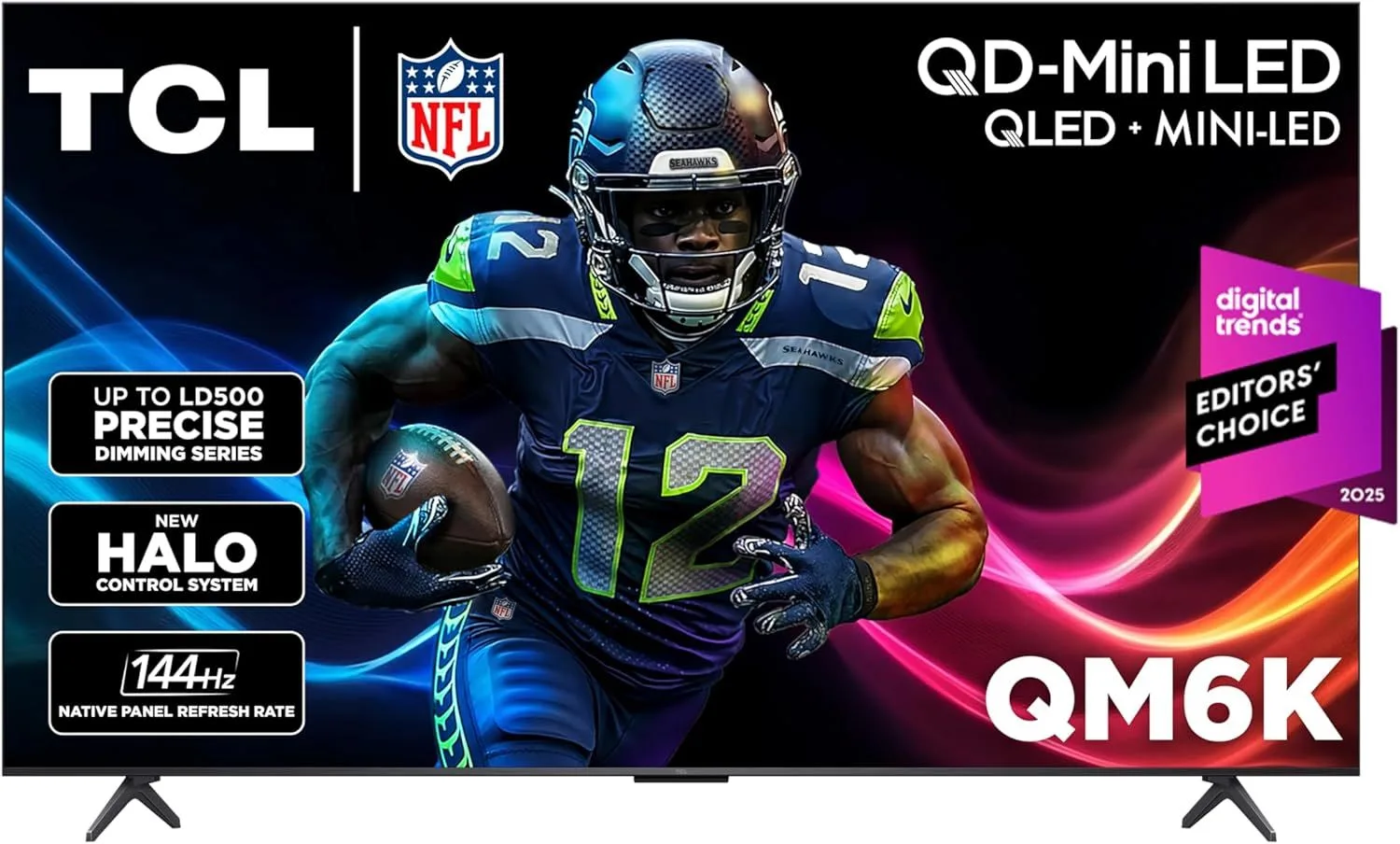
TCL 75" QM6K
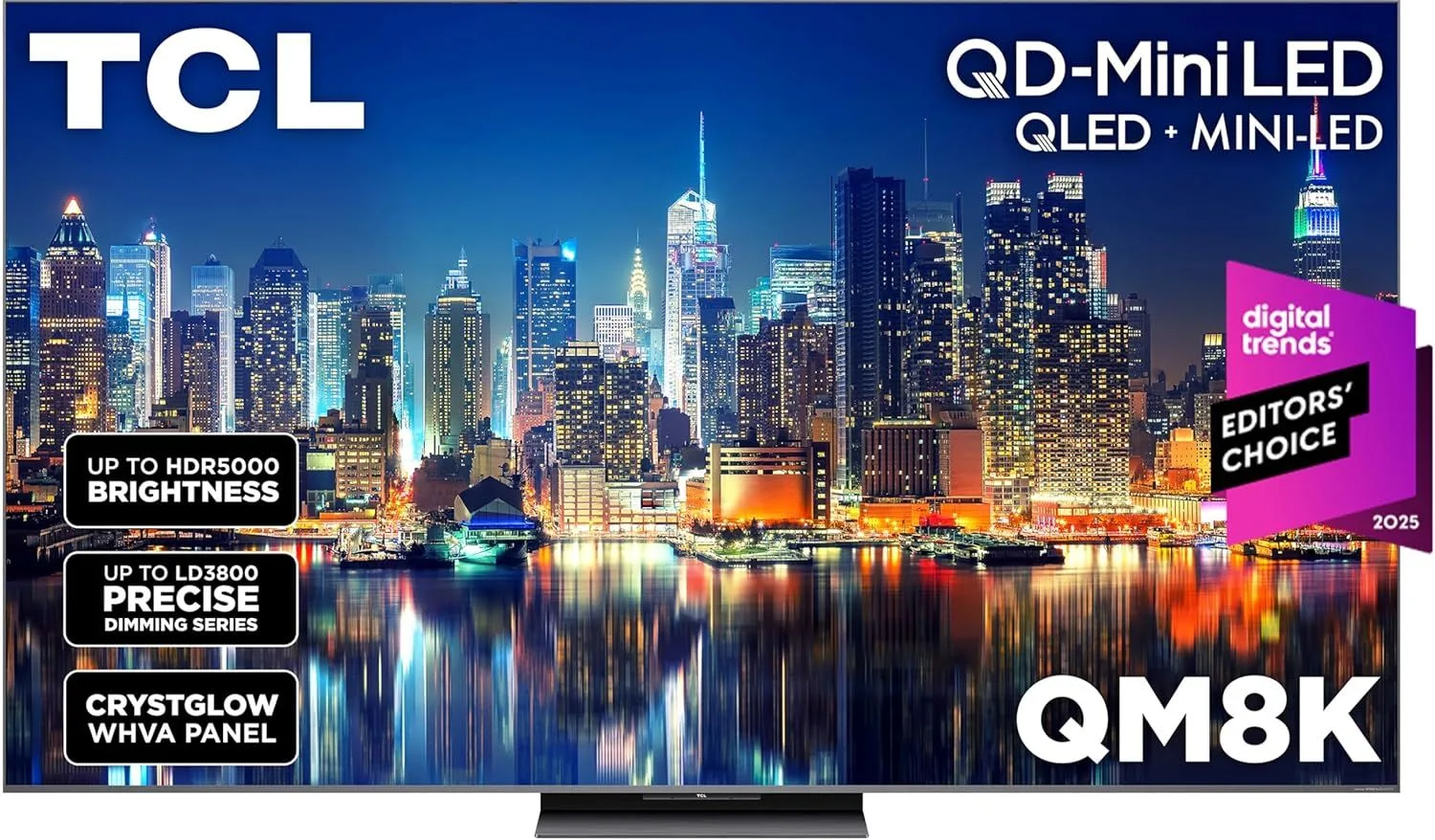
TCL 75" QM8K
At a Glance
| Feature | Editor's Pick TCL 75" QM6K QD-Mini LED 144Hz Smart TV | TCL 75" QM8K QD-Mini LED Premium 144Hz Smart TV |
|---|---|---|
| Price Range | $500–$800 | $1,800+ |
| Screen Size | 75" | 75" |
| Panel Type | Mini-LED | Mini-LED |
| Resolution | 4K UHD | 4K UHD |
| Refresh Rate | 144Hz | 165Hz |
| HDR Formats | HDR10+, Dolby Vision, HLG | HDR10+, Dolby Vision, HLG |
| Smart Platform | Google TV | Google TV |
| Check Price | Check Price |
The TCL Family Feud at 75"
Blooming Control QM8K Wins
Blooming — halos of light around bright objects on dark backgrounds — is Mini-LED's Achilles' heel, and it becomes more noticeable at larger screen sizes. At 75", the QM6K's roughly 500 zones produce visible blooming in challenging content. White subtitles on a black background show noticeable light bleed. The QM8K's Halo Control System reduces this measurably. It doesn't eliminate blooming, but it tightens the halos enough that most viewers won't notice them in real-world content.
If you watch a lot of high-contrast content — space movies, noir films, dark dramas — the QM8K's blooming advantage matters at 75".
Peak Brightness & HDR Impact QM8K Wins
The QM8K pushes roughly 2500 nits versus the QM6K's approximately 1500 nits. At 75", the extra brightness fills a larger room with more impactful HDR. Sunlit outdoor scenes, explosions, and neon cityscapes have noticeably more punch on the QM8K. The AIPQ PRO 2.0 processor also handles HDR tone mapping with more finesse, preserving highlight detail that the QM6K clips.
Refresh Rate for Gaming QM8K Wins
The QM8K runs at 165Hz — the highest refresh rate on any 75" TV. The QM6K runs at 144Hz. For PC gamers with GPUs that push above 120fps at 4K, the QM8K's extra headroom is useful. For console gamers on PS5 and Xbox (capped at 120Hz), both TVs are equally fast. The QM8K also has a slightly more refined Game Accelerator mode with better motion clarity in competitive titles.
Dimming Zone Count QM8K Wins
The QM8K uses TCL's Halo Control System versus the QM6K's standard Mini-LED zones (roughly 500). While TCL doesn't publish exact zone counts for the QM8K, independent measurements suggest substantially more granular control. More zones at 75" means each zone covers less screen area, enabling more precise light control around small bright objects.
Value per Inch QM6K Wins
The QM6K at $500–$800 is one of the best TV values in any category. A 75" Mini-LED with 144Hz, Dolby Vision, HDR10+, and Google TV for under $800 was unthinkable two years ago. The QM8K at $1,800+ delivers better performance across the board, but the improvements are incremental while the price premium is substantial.
Consider it this way: the QM6K gives you 85% of the QM8K's picture quality. That last 15% costs more than the QM6K itself.
Audio Quality QM8K Wins
The QM8K's 30W speaker system is louder and fuller than the QM6K's 20W setup. At 75", you need sound that fills a big room, and the QM8K does a better job on its own. But both TVs really demand an external soundbar at this screen size — the built-in speakers on either model can't match the picture quality.
Who Should Get Which?
Get the TCL 75" QM6K if...
- You want the best 75" Mini-LED value — maximum picture quality per dollar
- Your room has ambient light where the brightness difference is less pronounced
- You game on consoles (PS5/Xbox cap at 120Hz — the QM6K's 144Hz is more than enough)
- The savings let you invest in a proper soundbar for the 75" setup
Get the TCL 75" QM8K if...
- You want the absolute best Mini-LED performance at 75" — no compromises
- Blooming bothers you and you watch a lot of high-contrast dark content
- You're a PC gamer who can push 4K above 144fps
- Peak brightness matters — your home theater demands every nit
Frequently Asked Questions
What is TCL's Halo Control System on the QM8K?
Halo Control is TCL's proprietary blooming reduction technology. It uses advanced algorithms to control light bleed from Mini-LED dimming zones, reducing the halos that appear around bright objects on dark backgrounds. It doesn't eliminate blooming entirely, but it's a measurable improvement over the QM6K's standard zone control.
Is the QM8K's 165Hz refresh rate useful?
For PC gamers with high-end GPUs that can push 4K above 120fps, the QM8K's 165Hz is a genuine advantage. PS5 and Xbox Series X cap at 120Hz, so console gamers won't use the extra headroom. The 165Hz also improves motion clarity in non-gaming content.
How much brighter is the QM8K versus the QM6K?
The QM8K peaks around 2500 nits versus the QM6K's roughly 1500 nits. That's approximately 67% more peak brightness. The difference is clearly visible in HDR highlights — specular reflections and bright scenery pop harder on the QM8K.
Are both TVs on Google TV?
Yes. Both the QM6K and QM8K run Google TV with Chromecast built in. The software experience is identical — same apps, same interface, same voice assistant.
Is the QM8K worth more than double the QM6K's price?
For most buyers, no. The QM6K delivers excellent Mini-LED performance at 75" for under $800. The QM8K is for enthusiasts who want flagship-level brightness, Halo Control blooming reduction, and the highest refresh rate available. The incremental gains are real but expensive.
Which has better sound — QM6K or QM8K?
The QM8K has 30W speakers versus the QM6K's 20W. The QM8K is noticeably louder and fuller. But at 75", both TVs really need an external soundbar to fill the room — built-in speakers on either model don't match the picture quality.