TCL 65" QM7K vs Hisense 65" U75QG: Which Is Better in 2026?
The two best upper mid-range Mini-LEDs at 65" go head-to-head. Both deliver flagship-adjacent specs: 1000-class zones, 144Hz, Dolby Vision + HDR10+. They're modestly more expensive. This is a razor-thin matchup.
Verdict: The TCL 65" QM7K wins by a narrow margin. Its AIPQ PRO processor handles HDR tone mapping and motion more naturally than the Hisense, and the zone count edges slightly higher. But the Hisense 65" U75QG is so close that the decision could come down to whichever has a better sale price when you buy.
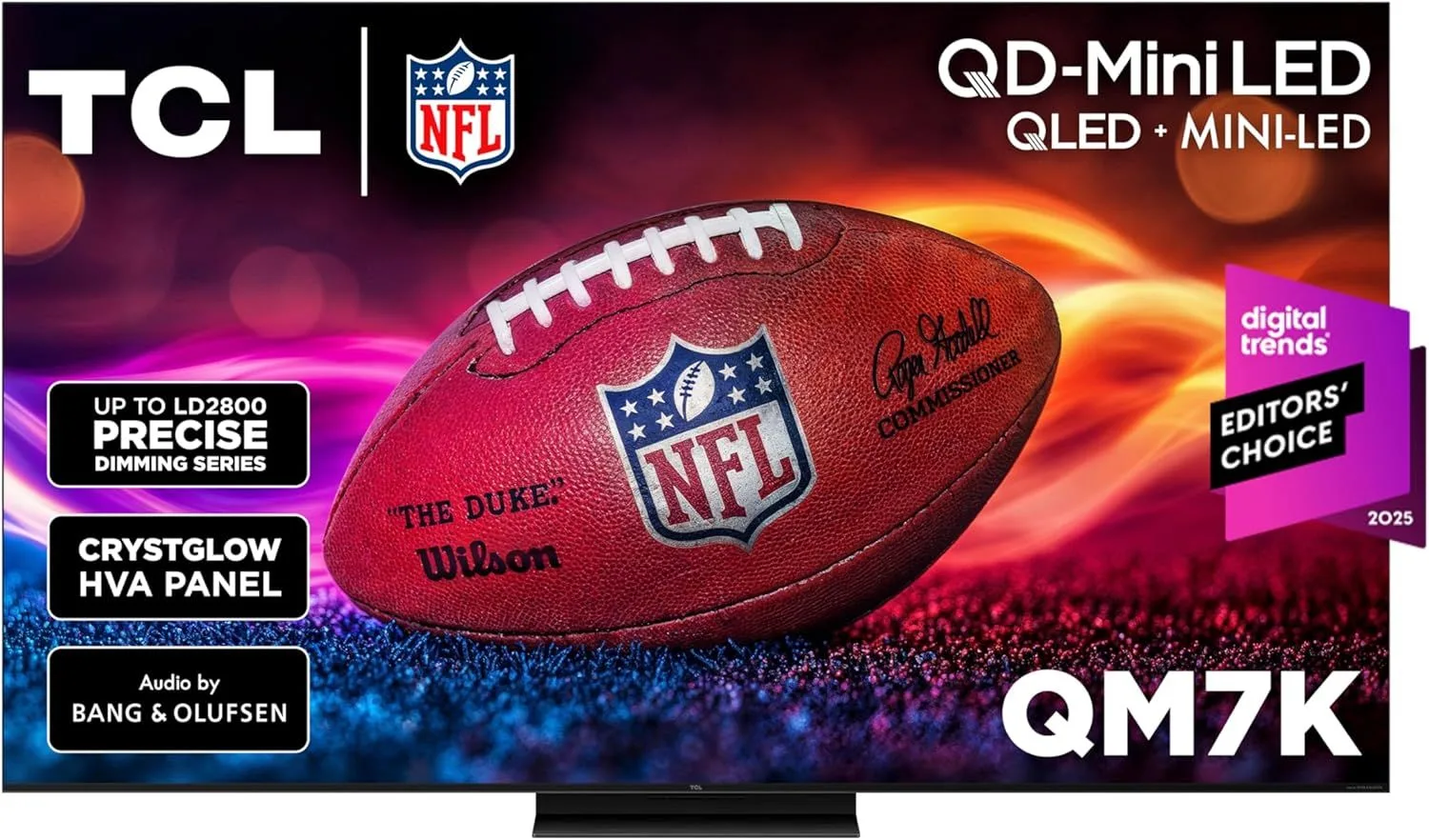
TCL 65" QM7K
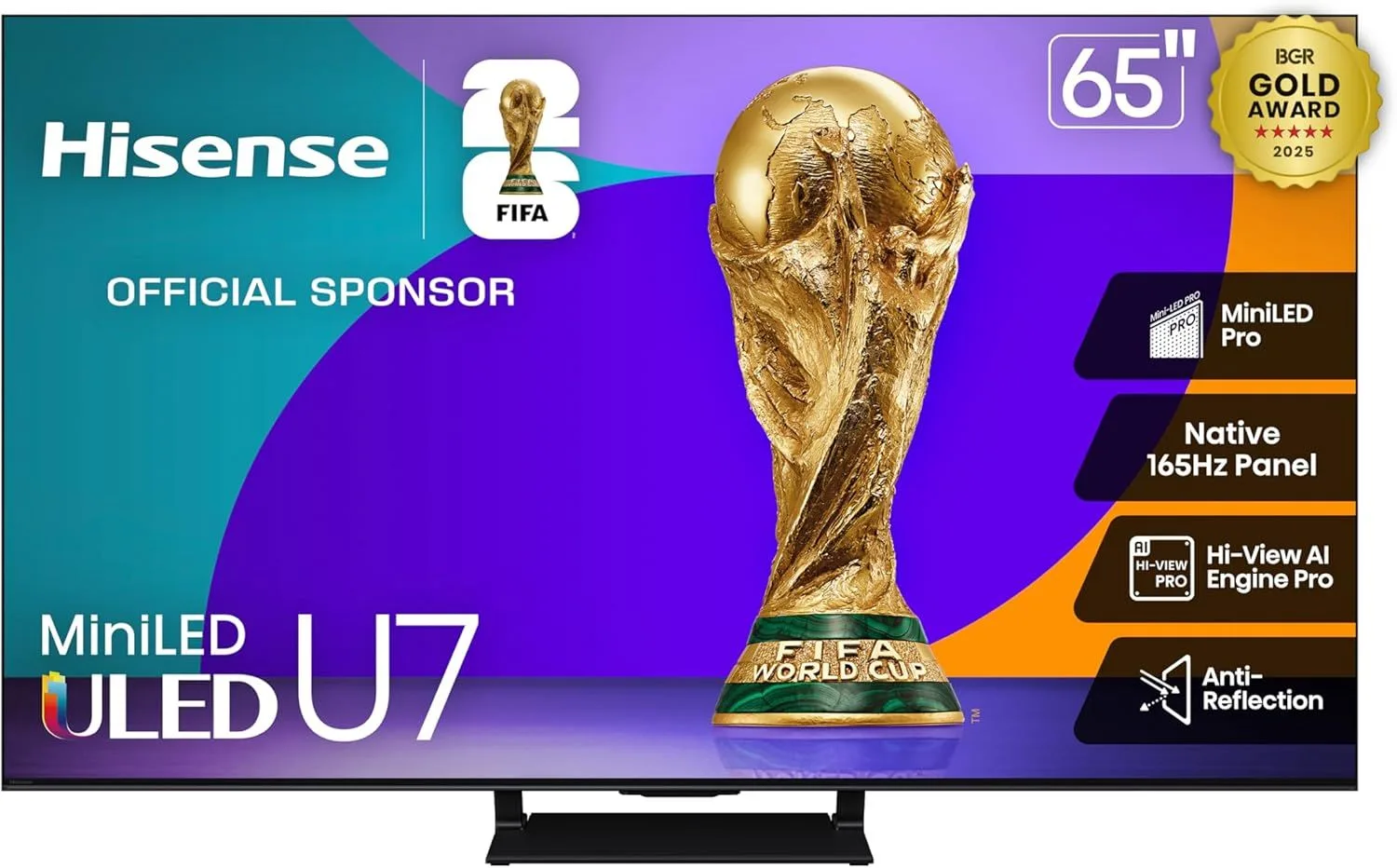
Hisense 65" U75QG
At a Glance
| Feature | Editor's Pick TCL 65" QM7K QD-Mini LED 144Hz Smart TV | Hisense 65" U75QG Mini-LED 144Hz Smart Google TV |
|---|---|---|
| Price Range | $800–$1,200 | $500–$800 |
| Screen Size | 65" | 65" |
| Panel Type | Mini-LED | Mini-LED QLED |
| Resolution | 4K UHD | 4K UHD |
| Refresh Rate | 144Hz | 144Hz |
| HDR Formats | HDR10+, Dolby Vision, HLG | HDR10+, Dolby Vision, HLG |
| Smart Platform | Google TV | Google TV |
| Check Price | Check Price |
Splitting Hairs at the Top
Processing & Tone Mapping QM7K Wins
TCL's AIPQ PRO processor handles HDR tone mapping with more finesse than Hisense's Hi-View Engine. In side-by-side testing with the same HDR content, the QM7K preserves more highlight detail in blown-out scenes and renders skin tones more naturally. The difference is subtle — you need to be paying attention in specific scenes — but the QM7K's processing refinement is consistent across content types.
Motion processing is another small TCL advantage. The QM7K's motion interpolation introduces fewer artifacts during camera pans, resulting in a more natural-looking image during sports and action sequences.
Raw Brightness Tie
The QM7K pushes roughly 2000 nits; the U75QG hits approximately 1800 nits. On paper, the QM7K is brighter. In practice, both TVs produce blindingly bright HDR highlights that exceed what most content demands. Neither TV leaves you wanting more brightness in any real-world scenario. Calling this anything other than a tie would be splitting hairs beyond reason.
Local Dimming Precision QM7K Wins
The QM7K's roughly 1000 zones versus the U75QG's approximately 800 zones result in slightly tighter light control. A small bright object — a candle flame, a distant streetlight — on a dark background shows marginally less blooming on the QM7K. The difference is most visible in challenging test patterns; in real-world content, both TVs handle local dimming well above average for their class.
Color Accuracy Tie
Both TVs achieve wide color gamut coverage thanks to quantum dot technology. Out-of-box accuracy is similar — both lean slightly warm, and both respond well to basic calibration. Color volume (the range of colors at different brightness levels) is also comparable. Neither TV has a color advantage worth making a purchasing decision over.
Gaming Features Tie
Both run at 144Hz with VRR, ALLM, and two HDMI 2.1 ports. Input lag measurements are within 1-2ms of each other. TCL's Game Accelerator provides a slight edge in motion clarity during competitive titles, but both TVs deliver excellent gaming experiences. PS5 and Xbox Series X perform identically on either.
Value at Current Pricing U75QG Wins
The Hisense U75QG is mid-range for its category while the TCL QM7K sits at above average for its category. The QM7K is modestly more expensive. Given how close the actual performance is, the U75QG's lower price makes it the better value. The QM7K's processing advantage is real but incremental — whether it justifies the price difference depends on how much those processing refinements matter to you.
Who Should Get Which?
Get the TCL 65" QM7K if...
- Processing quality matters most — you notice HDR tone mapping and motion artifacts
- You want the maximum zone count available at 65" for tightest blooming control
- You watch a lot of challenging HDR content where processing refinement shows
- The price difference between the two is small enough to be negligible
Get the Hisense 65" U75QG if...
- Value matters — you get 95% of the QM7K's performance at a lower price
- You'd rather put the savings toward a soundbar or wall mount
- Your primary use is casual streaming and gaming where processing differences are invisible
- You want whichever premium Mini-LED costs less today — check both prices before buying
Frequently Asked Questions
Which has more dimming zones — TCL QM7K or Hisense U75QG?
Both have approximately 800-1000 dimming zones. The QM7K is rated at roughly 1000 zones while the U75QG has approximately 800. In practice, local dimming performance is very similar, with the QM7K holding a slight edge in zone count.
Is the TCL QM7K brighter than the Hisense U75QG?
The QM7K peaks at roughly 2000 nits versus the U75QG's approximately 1800 nits. Both are very bright — the difference is marginal in most content. Both comfortably handle HDR highlights.
Which processor is better — TCL AIPQ PRO or Hisense Hi-View Engine?
The TCL AIPQ PRO has earned stronger reviews for HDR tone mapping and motion handling. Hisense's Hi-View Engine is competent but produces slightly less natural motion processing. In direct comparisons, the QM7K's processing has a small but visible edge in motion clarity.
Do both run Google TV?
Yes. Both run Google TV with Chromecast built in, identical app libraries, and the same voice assistant. The software experience is functionally the same.
Which is better for console gaming?
Both run at 144Hz with VRR and two HDMI 2.1 ports. Gaming performance is virtually identical. TCL's Game Accelerator mode provides a slight edge in input lag optimization, but both deliver excellent console gaming experiences.