TCL 65" QM6K vs Hisense 65" U75QG: Which Is Better in 2026?
Two of the best 65" Mini-LED TVs at different price points. The QM6K is the budget gateway; the U75QG is the enthusiast step-up. The question: is the significantly more expensive U75QG worth the leap?
Verdict: The TCL 65" QM6K wins for most buyers. It delivers 90% of the U75QG's picture quality at a noticeably lower price. The U75QG is the better TV on paper, but the QM6K is the better value.
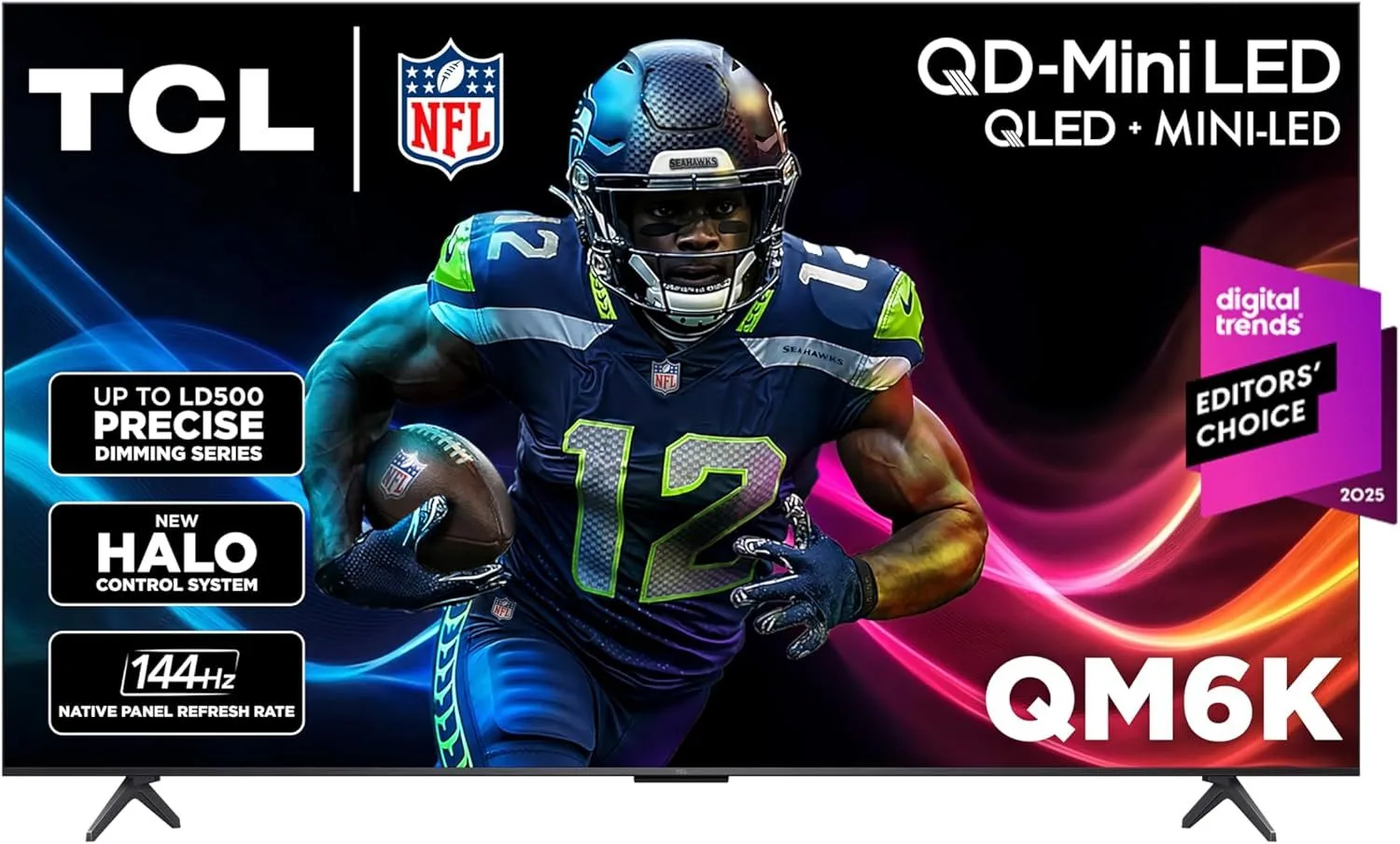
TCL 65" QM6K
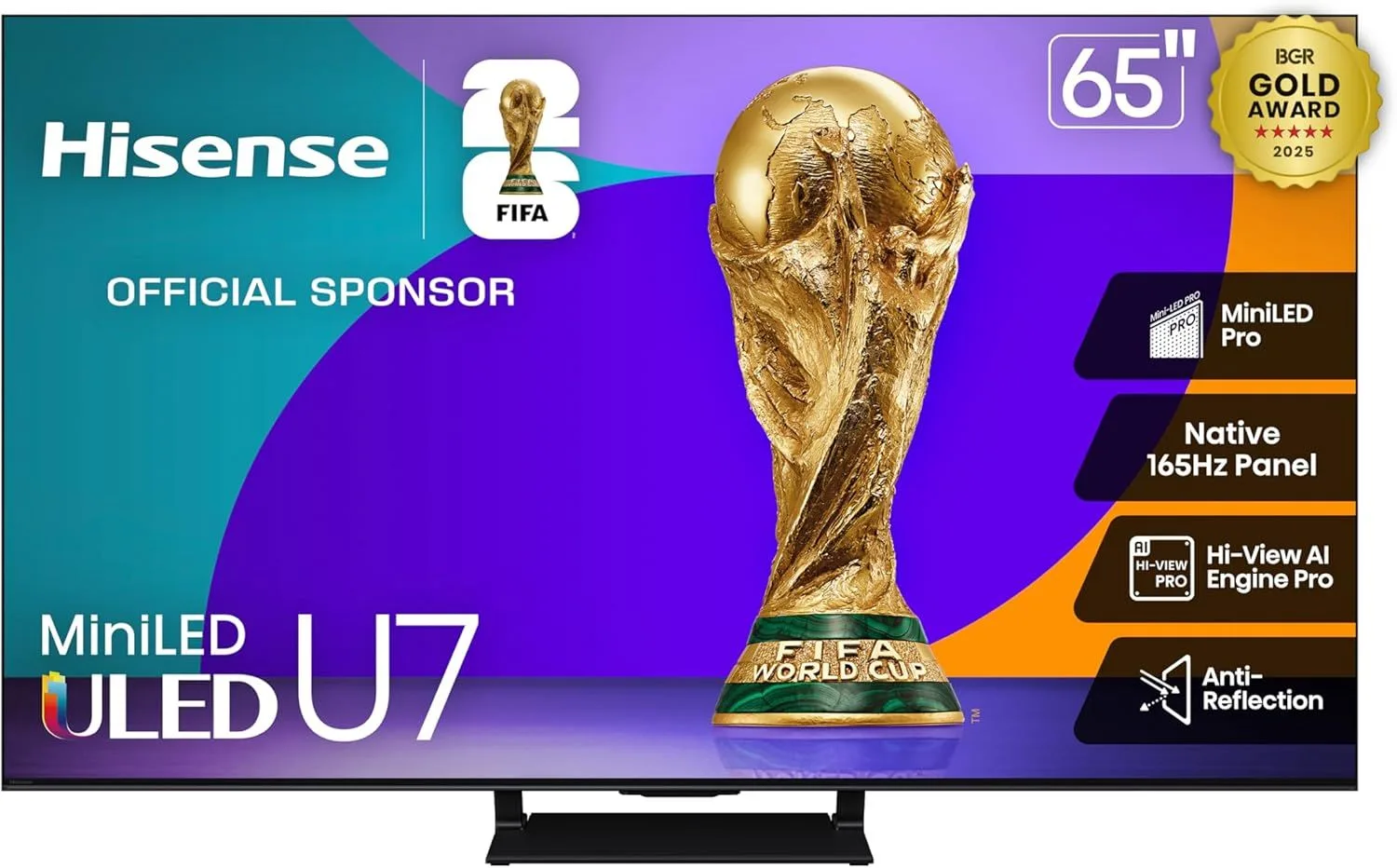
Hisense 65" U75QG
At a Glance
| Feature | Editor's Pick TCL 65" QM6K QD-Mini LED 144Hz Smart TV | Hisense 65" U75QG Mini-LED 144Hz Smart Google TV |
|---|---|---|
| Price Range | $500–$800 | $500–$800 |
| Screen Size | 65" | 65" |
| Panel Type | Mini-LED | Mini-LED QLED |
| Resolution | 4K UHD | 4K UHD |
| Refresh Rate | 144Hz | 144Hz |
| HDR Formats | HDR10+, Dolby Vision, HLG | HDR10+, Dolby Vision, HLG |
| Smart Platform | Google TV | Google TV |
| Check Price | Check Price |
Head-to-Head Breakdown
Picture Quality & HDR Performance U75QG Wins
The Hisense U75QG pulls ahead here with roughly 800 dimming zones versus the QM6K's approximately 500. More zones mean tighter light control around bright objects on dark backgrounds — the classic blooming test. Watching a campfire scene against a night sky, the U75QG keeps the surrounding darkness noticeably cleaner.
Peak brightness also favors the U75QG at around 1800 nits versus the QM6K's roughly 1500 nits. In practice, HDR highlights — a sun glinting off water, neon signs in a cityscape — pop harder on the Hisense. Both handle Dolby Vision and HDR10+ content well, but the U75QG's extra headroom makes specular highlights more convincing.
Gaming & Input Response Tie
Both TVs run at 144Hz with VRR and ALLM over HDMI 2.1. Input lag measurements land within a millisecond of each other. TCL's Game Accelerator mode provides a slight edge in motion clarity during fast-paced shooters, but you'd need to play both side by side to notice. For PS5 and Xbox Series X owners, either TV delivers a responsive, tear-free experience at 4K/120Hz.
Each provides two HDMI 2.1 ports, so you can keep two consoles connected without swapping cables. The gaming experience is functionally identical.
Blooming & Dark Scene Handling U75QG Wins
Mini-LED's main weakness is blooming — that halo of light around bright objects on dark backgrounds. The U75QG's higher zone count reduces blooming noticeably. A white subtitle bar on a black background shows tighter light control on the Hisense, with less bleed into the surrounding darkness.
The QM6K isn't bad by any stretch. At its price point, the blooming is well-managed. But place them side by side in a dark room with challenging content, and the U75QG's advantage is visible.
Smart Platform & Interface Tie
Both run Google TV with Chromecast built in. Same app library, same interface, same voice assistant. The remote designs differ slightly — TCL's feels a touch more ergonomic, Hisense's has a dedicated Netflix button — but the software experience is identical. Neither TV has an ad-free interface, but Google TV is less aggressive than Fire TV.
Build Quality & Design QM6K Wins
The TCL QM6K feels more solidly assembled for its price class. The bezels are thinner, the stand is more stable, and the cable management is cleaner. The Hisense U75QG isn't poorly built, but TCL has tightened its hardware quality considerably in recent generations. At close inspection, the QM6K's fit and finish edges ahead.
Value Proposition QM6K Wins
The QM6K is below average for its category while the U75QG is mid-range for its category. The U75QG is significantly more expensive, and the picture quality gains — more zones, more brightness — are real but incremental. For most living rooms with some ambient light, the QM6K's performance is indistinguishable from the U75QG's. The price gap only makes sense if you have a dedicated dark home theater where those extra zones and nits matter.
Who Should Get Which?
Get the TCL 65" QM6K if...
- You want the best Mini-LED value at 65" — maximum picture quality per dollar
- Your room has ambient light (windows, lamps) where the brightness difference is less visible
- You're stepping up from a budget LED or QLED and want the biggest improvement for the least money
- Gaming is a priority — you get 144Hz and HDMI 2.1 at a lower entry price
Get the Hisense 65" U75QG if...
- You watch a lot of HDR content in a dark or dimmed room where zone count matters
- You want the best possible dark-scene performance short of OLED
- Blooming bothers you — the extra zones make a visible difference on challenging content
- You value peak brightness for daytime HDR viewing and don't mind the price premium
Frequently Asked Questions
Is the Hisense U75QG worth the extra money over the TCL QM6K?
The U75QG delivers roughly 60% more dimming zones and around 300 additional nits of peak brightness. If you watch a lot of HDR content in a dimmed room, those gains are visible. For casual streaming and gaming, the QM6K's picture quality is close enough that the price gap is hard to justify.
Which TV is better for gaming — TCL QM6K or Hisense U75QG?
Both run at 144Hz with VRR and HDMI 2.1, so gaming performance is nearly identical in terms of input lag and response time. The QM6K edges ahead slightly thanks to TCL's Game Accelerator mode, but most gamers won't notice the difference.
Do the TCL QM6K and Hisense U75QG both support Dolby Vision?
Yes. Both support Dolby Vision and HDR10+, giving you full format flexibility regardless of which streaming service or disc format you use.
Which has better viewing angles — TCL QM6K or Hisense U75QG?
Neither excels here. Both use VA panels with relatively narrow viewing angles. If you have a wide seating arrangement, consider a TV with an IPS panel or Samsung's wide viewing angle technology instead.
Can I wall-mount both the TCL QM6K and Hisense U75QG?
Yes, both support standard VESA wall mounts. The TCL QM6K uses a 300x300mm VESA pattern and the Hisense U75QG uses a similar standard pattern. Both are reasonably slim for Mini-LED TVs.