Samsung 55" Q7F QLED vs Hisense 55" QD7QF: Which Is Better in 2026?
A crossover showdown: Samsung's entry QLED with 120Hz gaming versus Hisense's entry Mini-LED with better contrast. The Q7F is modestly more expensive than the QD7QF. One prioritizes motion; the other prioritizes picture depth.
Verdict: Gamers pick the Samsung 55" Q7F QLED for its 120Hz panel and HDMI 2.1. Movie watchers pick the Hisense 55" QD7QF for its Mini-LED contrast advantage. Neither TV does everything — the winner depends entirely on your primary use case.
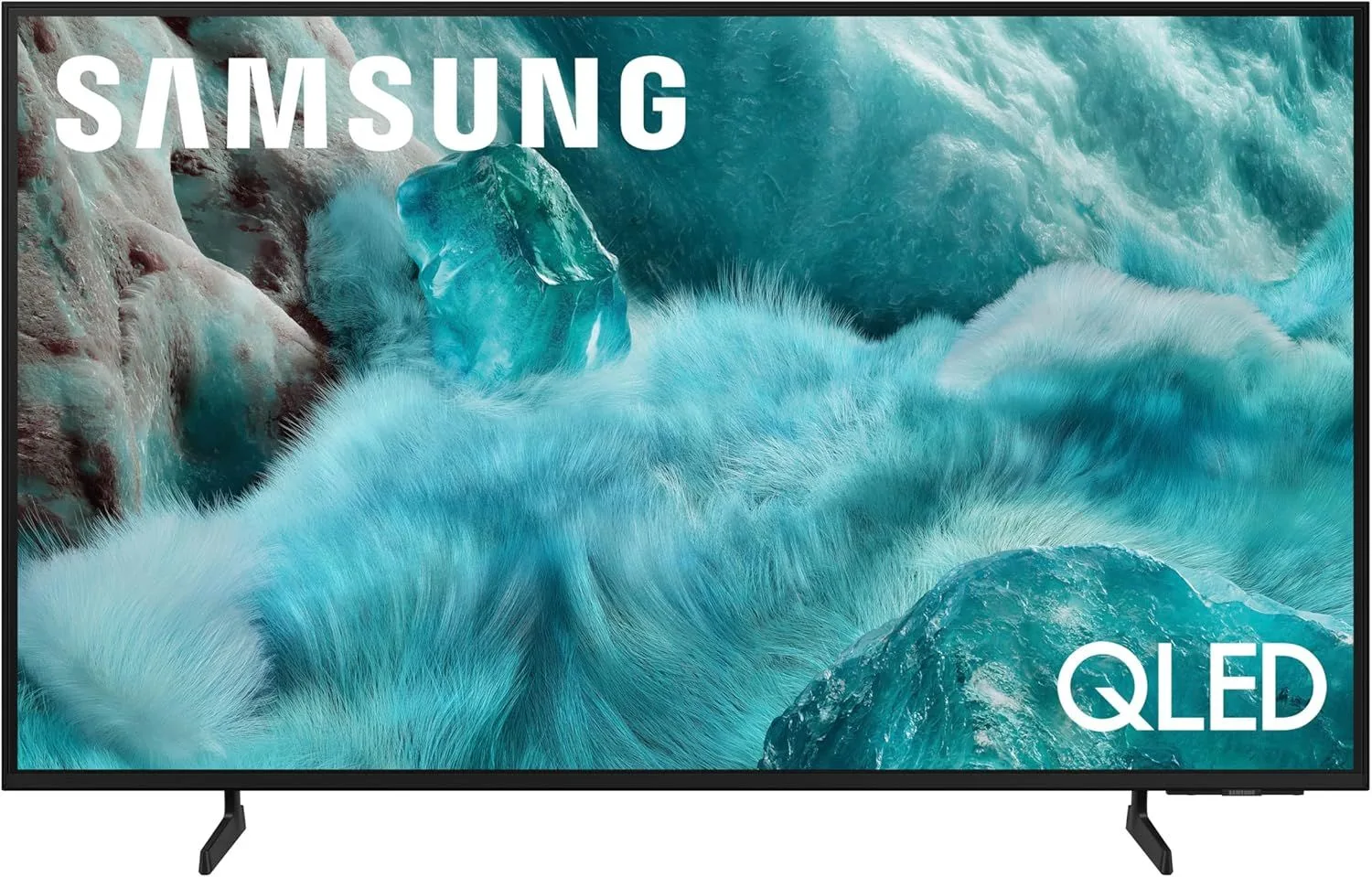
Samsung 55" Q7F QLED
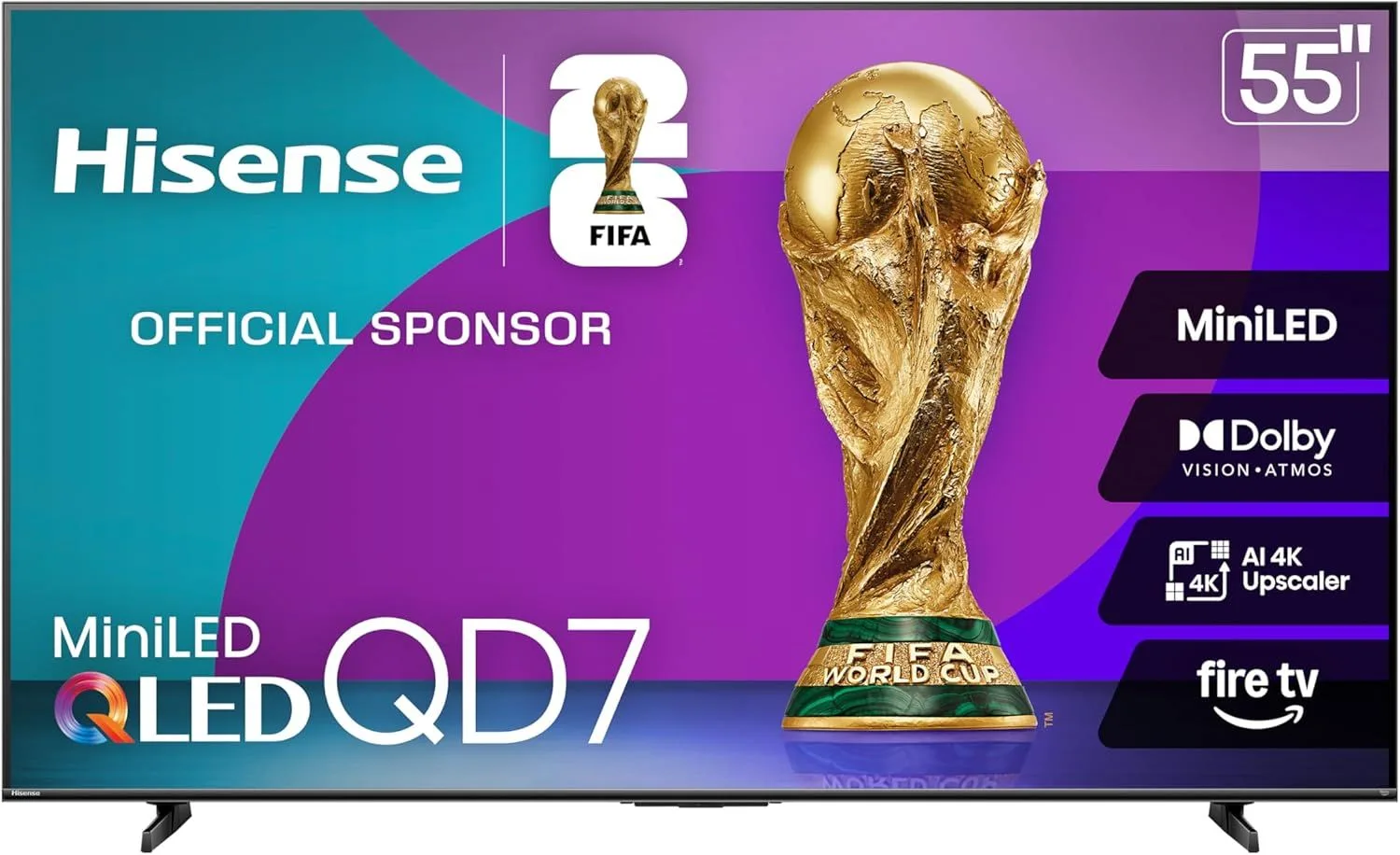
Hisense 55" QD7QF
At a Glance
| Feature | Samsung 55" Q7F QLED Smart TV (2025) | Hisense 55" QD7QF Mini-LED QLED Smart TV |
|---|---|---|
| Price Range | $300–$500 | $300–$500 |
| Screen Size | 55" | 55" |
| Panel Type | QLED | Mini-LED QLED |
| Resolution | 4K UHD | 4K UHD |
| Refresh Rate | 120Hz | 60Hz |
| HDR Formats | HDR10+, HLG | HDR10+, Dolby Vision, HLG |
| Smart Platform | Tizen | Google TV |
| Check Price | Check Price |
Head-to-Head Breakdown
Dark Scene Contrast QD7QF Wins
The Hisense QD7QF's Mini-LED backlight with roughly 150 zones delivers a clear contrast advantage over the Q7F's edge-lit panel. Dark scenes — space movies, night cityscapes, dimly lit interiors — look deeper and more detailed on the Hisense. The Samsung's edge-lit design creates visible light bleed in corners during dark content, especially noticeable in a dimmed room.
Mini-LED at this entry level isn't flawless. The QD7QF's 150 zones create some blooming around bright objects on dark backgrounds. But compared to the Q7F's complete lack of local dimming, the Hisense wins this category comfortably.
Motion & Refresh Rate Q7F QLED Wins
The Samsung Q7F runs at 120Hz; the Hisense QD7QF is locked to 60Hz. For fast-motion content — sports, action movies, gaming — the Samsung produces smoother, less blurry images. Soccer balls stay sharper in flight. Camera pans across crowds don't judder. The difference between 60Hz and 120Hz is visible even to casual viewers once you know what to look for.
For gaming specifically, the Q7F adds HDMI 2.1 with VRR support. PS5 and Xbox Series X owners can play at 4K/120Hz. The QD7QF caps at 4K/60Hz with no HDMI 2.1 — a fundamental limitation for next-gen gaming.
Color Volume & HDR Formats QD7QF Wins
The QD7QF supports Dolby Vision, HDR10+, and HLG. The Q7F supports only HDR10+ and HLG — no Dolby Vision. For Netflix, Disney+, and Apple TV+ subscribers who rely on Dolby Vision, the Hisense provides the premium HDR experience. The QD7QF's quantum dot layer also pushes wider color coverage, making HDR content more vivid.
Gaming Ecosystem Q7F QLED Wins
Samsung's Gaming Hub gives the Q7F access to Xbox Cloud Gaming and GeForce Now without a console. For casual gamers or PC gamers wanting to play on the couch, Samsung's cloud gaming integration is unique at this price. The Q7F also has Auto Low Latency Mode and a dedicated Game Mode that optimizes response time. The QD7QF has basic game settings but nothing approaching Samsung's gaming feature set.
Smart Platform & Apps QD7QF Wins
The QD7QF runs Google TV with Chromecast built in — the largest app library and best content discovery of any smart TV platform. The Q7F runs Samsung's Tizen, which is fast and smooth but has a smaller app library and more Samsung-centric recommendations. For households that use Chromecast or want the most open platform, Google TV is the better choice.
Build & Brand Trust Q7F QLED Wins
Samsung's build quality, warranty network, and brand reputation still carry weight. The Q7F's AirSlim design is noticeably thinner and more premium-looking than the QD7QF. Samsung's retail support through Best Buy and its own repair network is also broader. If brand confidence and after-sale support matter, Samsung has the edge.
Who Should Get Which?
Get the Samsung 55" Q7F QLED if...
- You game on PS5 or Xbox Series X — 120Hz and HDMI 2.1 are essential
- Sports are a priority — 120Hz handles fast motion better than 60Hz
- You want Samsung's cloud gaming ecosystem
- Brand trust and build quality matter to your purchase decision
Get the Hisense 55" QD7QF if...
- Movies and streaming are your primary use — Mini-LED contrast beats edge-lit
- You want Dolby Vision for Netflix and Disney+
- You prefer Google TV's open platform and Chromecast integration
- You watch a lot in dimmed rooms where the contrast advantage is most visible
Frequently Asked Questions
Is the Hisense QD7QF really Mini-LED at this price?
Yes, but it's entry-level Mini-LED with approximately 150 dimming zones and around 800 nits peak brightness. That's a step above the Samsung Q7F's edge-lit design, but well below what premium Mini-LED TVs deliver. Think of it as Mini-LED benefits at a budget price — real improvement, modest scale.
Does the Samsung Q7F have local dimming?
No. The Q7F is edge-lit without local dimming zones. The Hisense QD7QF's Mini-LED backlight with approximately 150 zones gives it a real contrast advantage, especially in dark scenes.
Which is better for gaming at this price — Q7F or QD7QF?
The Samsung Q7F wins for gaming with its 120Hz panel, HDMI 2.1, and Samsung Gaming Hub. The Hisense QD7QF is locked to 60Hz with no HDMI 2.1 — a dealbreaker for PS5 and Xbox Series X owners.
Which smart TV platform is better — Tizen or Google TV?
Google TV (Hisense) has a larger app library and better cross-platform integration. Tizen (Samsung) is faster and smoother but more locked into Samsung's ecosystem. For most people, Google TV is more flexible; for Samsung device owners, Tizen is more seamless.
Do both TVs support Dolby Vision?
The Hisense QD7QF supports Dolby Vision and HDR10+. The Samsung Q7F only supports HDR10+ — Samsung has never adopted Dolby Vision on any of its TVs.