Samsung 65" QN70F vs TCL 65" QM7K: Which Is Better in 2026?
Samsung's anti-glare champion against TCL's zone-count king. The QN70F fights window glare better than anything else; the QM7K delivers near-reference brightness and local dimming. They're modestly more expensive — which approach wins depends entirely on your room.
Verdict: The TCL 65" QM7K wins on raw picture quality — more zones, more brightness, Dolby Vision support. But the Samsung 65" QN70F wins if your room has windows. Samsung's anti-reflection coating is unmatched.
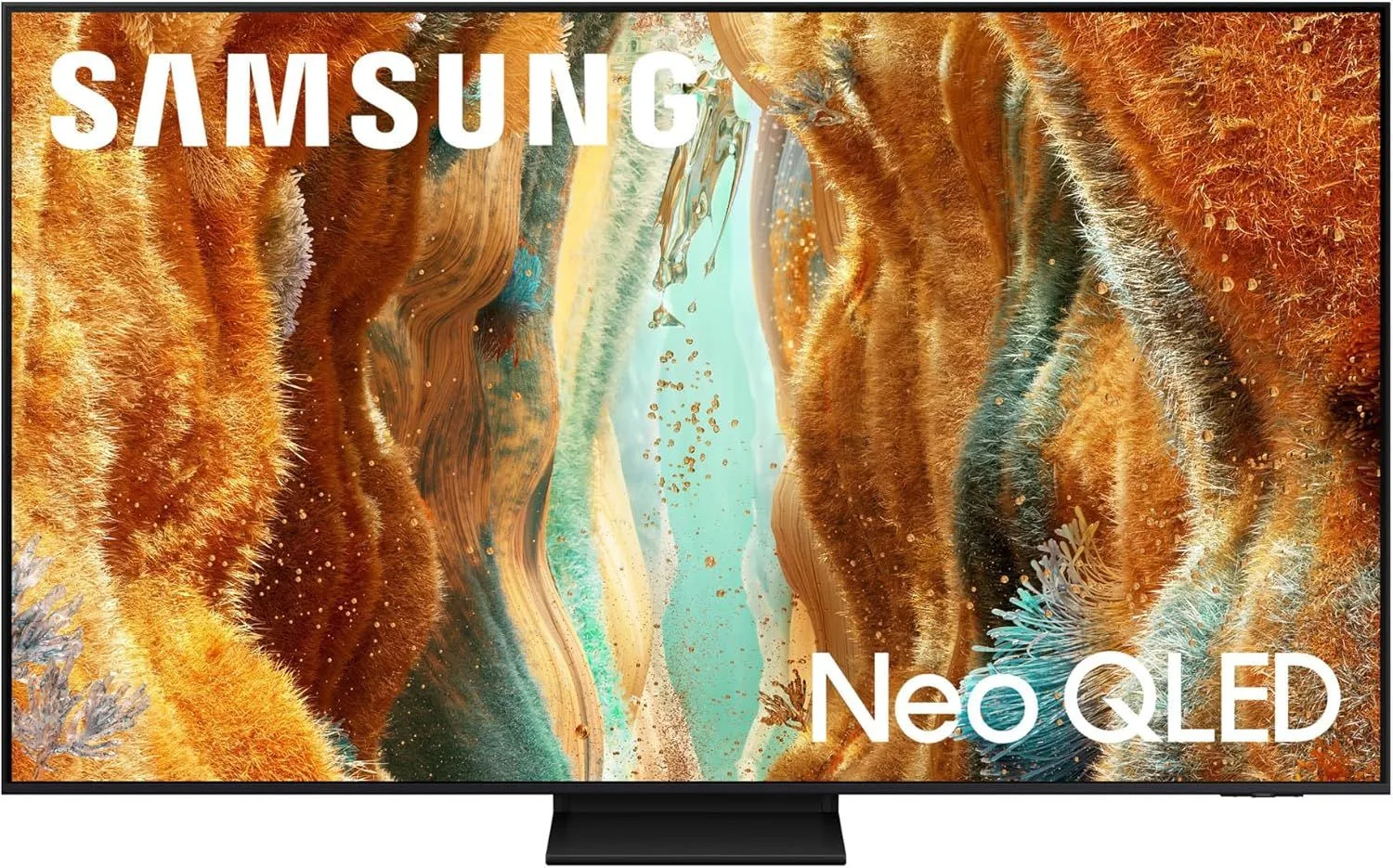
Samsung 65" QN70F
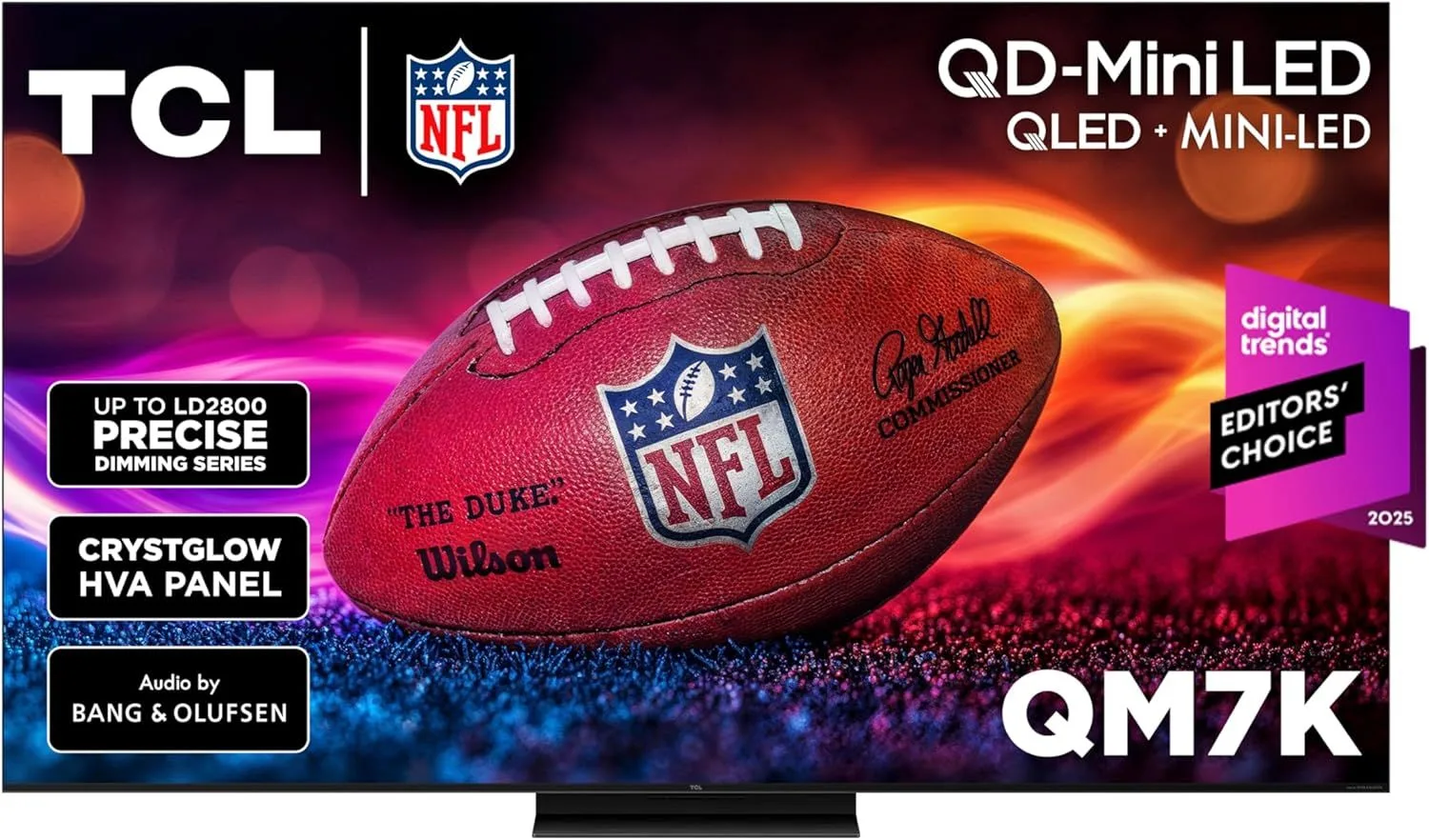
TCL 65" QM7K
At a Glance
| Feature | Samsung 65" QN70F Neo QLED Mini-LED Smart TV (2025) | Editor's Pick TCL 65" QM7K QD-Mini LED 144Hz Smart TV |
|---|---|---|
| Price Range | $800–$1,200 | $800–$1,200 |
| Screen Size | 65" | 65" |
| Panel Type | Mini-LED | Mini-LED |
| Resolution | 4K UHD | 4K UHD |
| Refresh Rate | 120Hz | 144Hz |
| HDR Formats | HDR10+, HLG | HDR10+, Dolby Vision, HLG |
| Smart Platform | Tizen | Google TV |
| Check Price | Check Price |
Head-to-Head Breakdown
Brightness & Contrast QM7K Wins
The TCL QM7K pushes roughly 2000 nits of peak brightness compared to the QN70F's approximately 1500 nits. More importantly, the QM7K's roughly 1000 dimming zones outperform Samsung's Quantum Matrix in direct comparisons. Watching a fireworks scene, the QM7K renders each burst with tighter light control and less bleed into the night sky.
Samsung's NQ4 processor handles tone mapping competently, but TCL's AIPQ PRO processor edges ahead in HDR highlight detail. The QM7K simply has more hardware to work with.
Anti-Glare & Bright Room Performance QN70F Wins
Samsung's anti-reflection coating is in a class of its own. With afternoon sun streaming through a west-facing window, the QN70F maintains a watchable picture where the QM7K's screen washes out. This isn't a subtle difference — Samsung's coating genuinely eliminates most reflections instead of just diffusing them.
If your TV lives in a bright living room with multiple windows, the QN70F's anti-glare advantage might matter more than the QM7K's raw brightness advantage. In a dark home theater, the QM7K pulls ahead.
HDR Format Support QM7K Wins
The QM7K supports both Dolby Vision and HDR10+. The QN70F supports HDR10+ only — Samsung has never adopted Dolby Vision. This matters for Netflix, Apple TV+, Disney+, and most streaming services that use Dolby Vision as their premium HDR format. On Samsung, that content falls back to standard HDR10, losing the scene-by-scene metadata.
If you primarily watch Amazon Prime Video (which favors HDR10+), the Samsung holds its own. For everything else, the QM7K's dual-format support is a clear advantage.
Refresh Rate & Gaming QM7K Wins
The QM7K runs at 144Hz versus the QN70F's 120Hz. Both have HDMI 2.1 with VRR, but that extra 24Hz gives the TCL an edge in competitive gaming. Samsung counters with Gaming Hub — its cloud gaming platform that lets you play Xbox Cloud Gaming and GeForce Now without a console. If cloud gaming matters to you, Samsung offers something unique.
For traditional console gaming on PS5 or Xbox Series X (which cap at 120Hz), both TVs are effectively identical.
Viewing Angles QN70F Wins
Samsung's wide viewing angle technology maintains color accuracy and contrast further off-axis than the QM7K's standard VA panel. In a wide living room where people sit at various angles, the QN70F delivers a more consistent picture to everyone. The QM7K's picture degrades noticeably from side seats — colors shift and contrast drops.
Smart Platform QM7K Wins
The QM7K runs Google TV with Chromecast built in; the QN70F runs Samsung's Tizen OS. Google TV has a larger app library and better cross-platform integration. Tizen is smoother and faster but locks you into Samsung's ecosystem. For most people, Google TV is the more flexible platform.
Who Should Get Which?
Get the Samsung 65" QN70F if...
- Your living room has lots of windows and natural light — Samsung's anti-reflection coating is unmatched
- You have a wide seating arrangement where viewing angles matter
- You want Samsung's Gaming Hub for cloud gaming access
- You're already invested in the Samsung SmartThings ecosystem
Get the TCL 65" QM7K if...
- You watch in a dark or dimmed room where zone count and brightness shine
- You want Dolby Vision support for Netflix, Disney+, and Apple TV+
- You game at 144Hz and want the highest refresh rate available
- You want more raw picture quality per dollar — the QM7K delivers more zones for less money
Frequently Asked Questions
Which has better HDR — Samsung QN70F or TCL QM7K?
The TCL QM7K has more dimming zones (roughly 1000 vs Samsung's Quantum Matrix) and higher peak brightness around 2000 nits. For raw HDR impact, the QM7K wins. But the Samsung handles Dolby Vision differently — it only supports HDR10+ — so Dolby Vision users should choose the TCL.
Is the Samsung QN70F better for bright rooms?
Yes. Samsung's anti-reflection coating is the best in the Mini-LED category. The QN70F handles glare from windows and overhead lights better than any competitor, including the QM7K. If your living room gets a lot of natural light, Samsung wins this category.
Does the TCL QM7K support Dolby Vision?
Yes. The QM7K supports both Dolby Vision and HDR10+, giving you complete format flexibility. Samsung TVs only support HDR10+, so Dolby Vision content from Netflix, Apple TV+, and Disney+ doesn't get the dynamic metadata treatment on the QN70F.
Which is better for gaming — QN70F or QM7K?
The QM7K has a 144Hz panel versus the QN70F's 120Hz. Both have HDMI 2.1 with VRR. For competitive gaming where every frame matters, the QM7K's higher refresh rate is a tangible advantage. Samsung's Gaming Hub provides cloud gaming access, which the QM7K lacks.
Which TV has better viewing angles?
Samsung's QN70F has a wide viewing angle technology that maintains color accuracy further off-axis. The QM7K uses a standard VA panel with narrower viewing angles. For wide seating arrangements, Samsung wins.