Samsung 65" Q7F QLED Smart TV (2025) Review 2026
Samsung's entry QLED scaled to 65" brings quantum dot color and 120Hz to the big screen. The edge-lit backlighting is the catch.
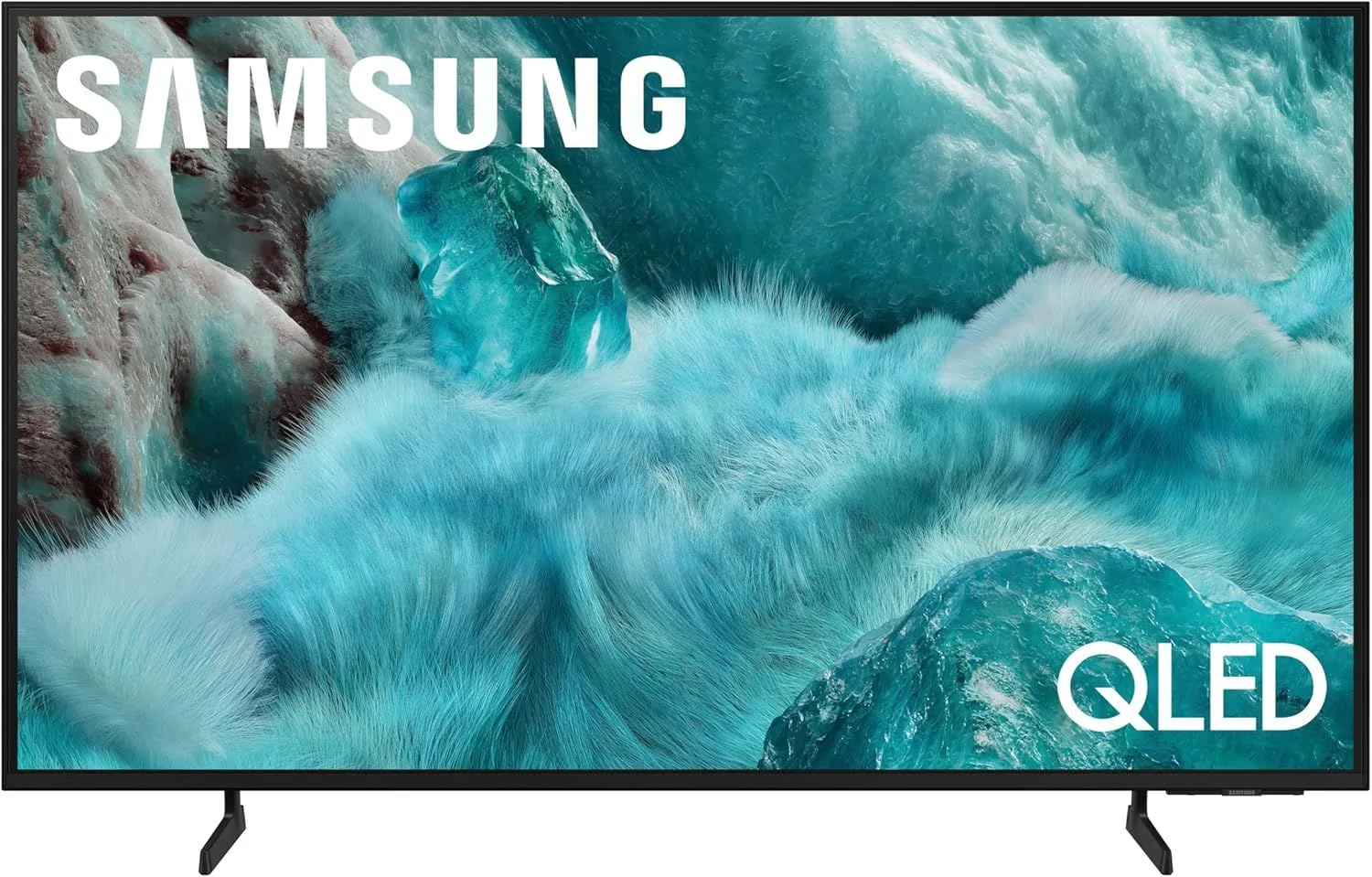
Samsung's 65" Q7F adds 120Hz and QLED branding, but the edge-lit panel without local dimming makes it hard to justify over TCL or Hisense alternatives that offer more for less.
Scaling the Q7F Formula to 65"
The 65" Q7F takes the same formula as the 55" model — QLED color, 120Hz, Samsung Tizen, AirSlim design — and stretches it to a larger canvas. At mid-range for its category pricing, it competes head-to-head with the Roku 65" Pro, TCL's 65" S5, and LG's QNED82.
The larger screen size amplifies both strengths and weaknesses. QLED color is more immersive at 65" — nature documentaries and animated films fill the room with rich, saturated hues. But the edge-lit backlighting also becomes more visible. Flashlight scenes in dark movies show uneven brightness that is less noticeable on the smaller panel.
Strengths
- ✓120Hz panel enables smoother motion and basic gaming
- ✓Quantum Processor 4K with AI upscaling
- ✓Samsung Gaming Hub with cloud gaming access
Cons
- ✗No Dolby Vision support
- ✗Edge-lit with no local dimming zones
- ✗Only 1 HDMI 2.1 port — limits multi-console setups
Gaming at 65": The 120Hz Advantage
The 120Hz panel makes a bigger perceptual difference at 65" than at 55". Fast camera motion in games, sports panning shots, and action sequences all benefit from the doubled refresh rate. Samsung's Motion Xcelerator processes intermediate frames smoothly enough for non-gaming content like sports.
The single HDMI 2.1 limitation stings more at 65" because this is likely a living room TV where multiple devices compete for ports. With only one port capable of 4K 120Hz, you are choosing which console gets the premium experience. The Q8F's dual 2.1 ports solve this for a price premium.
Samsung's Quantum Processor 4K handles AI upscaling particularly well at 65". Lower-resolution cable content and 1080p streaming sources look noticeably sharper than on competing processors. If you watch a mix of 4K and non-4K content, Samsung's upscaling makes the most of the panel real estate.
Tizen at the Center of Samsung's World
Tizen's strengths — fast app loading, SmartThings integration, Samsung Gaming Hub — carry over from the 55" model. The Samsung TV Plus free channels add content without additional subscriptions. The Solar Cell remote avoids battery waste.
No Dolby Vision. This is Samsung's company-wide decision and it remains the most consistent criticism. At this price, Roku and LG both offer Dolby Vision alongside HDR10+. Samsung's answer — that HDR10+ serves the same purpose — ignores the fact that Dolby Vision has a larger content library in 2026.
65" QLED Value: Samsung vs. the Field
The Roku 65" Pro costs similarly priced and adds local dimming plus Dolby Vision. The TCL 65" S5 costs noticeably less with dual HDR but drops to 60Hz. The LG QNED82 offers wider viewing angles and webOS at a slight premium.
Samsung's 65" Q7F wins on build quality, design, and ecosystem integration. It loses on contrast (no local dimming), HDR format support (no Dolby Vision), and gaming port count (one HDMI 2.1). The decision comes down to what you prioritize: Samsung polish or raw feature count.
Frequently Asked Questions
Is the Samsung Q7F better at 65" than 55"?
The larger screen makes the edge-lit backlighting limitation more noticeable. Dark scenes that look acceptable on 55" show more backlight uniformity issues at 65". The QLED color benefit also scales well to 65". Net result: slightly worse contrast perception but better color immersion.
Should I buy the 65" Q7F or 65" Roku Pro?
The Roku 65" Pro adds full-array local dimming and Dolby Vision for a similar price. On specs, the Roku wins. The Samsung wins on design, build quality, and Tizen ecosystem. If you own Samsung products, the Q7F makes sense. Otherwise, the Roku Pro offers more picture quality per dollar.
Does Samsung Gaming Hub replace a console?
For casual gaming, partially. Gaming Hub gives access to Xbox Cloud Gaming, GeForce NOW, and other streaming services without hardware. Latency is higher than a local console, and you need a strong internet connection. It supplements a console rather than replacing one.
Can I connect two consoles at 4K 120Hz?
No. The 65" Q7F has only one HDMI 2.1 port. Your primary console gets 4K 120Hz with VRR. A second console is limited to 4K 60Hz on the standard HDMI ports. For dual 2.1 ports, look at the Samsung Q8F or Roku Pro.
Final Verdict
Rating: 4.3/5
Samsung's 65" Q7F adds 120Hz and QLED branding, but the edge-lit panel without local dimming makes it hard to justify over TCL or Hisense alternatives that offer more for less.
Buy it for Samsung design and 120Hz QLED at 65". Skip it if local dimming or Dolby Vision are on your must-have list — competitors offer both for similar money.