LG 65" QNED82 4K Smart TV (2025) Review 2026
LG's NanoCell technology delivers the widest viewing angles in the mid-range. A genuine advantage — if your room layout demands it.
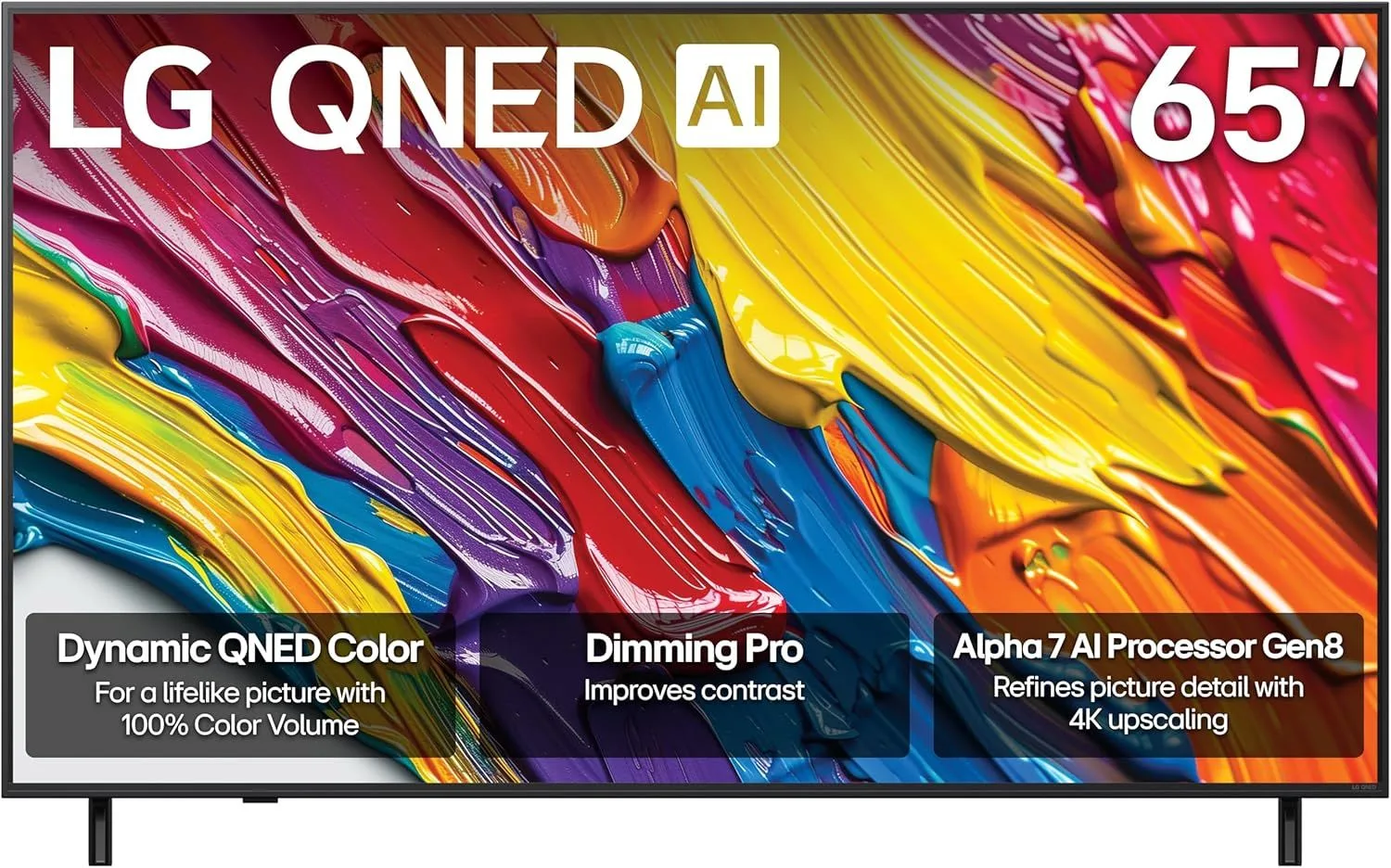
LG's QNED82 brings NanoCell color filtering and webOS to the mid-range. The viewing angles are genuinely wider than VA-panel competitors, making it ideal for wider seating arrangements.
The Wide-Angle Advantage
Here is the scenario where the QNED82 wins: a U-shaped sectional sofa, five people watching a football game, three of them sitting at 40-degree angles from the screen. On a Samsung QLED or TCL with a VA panel, those side viewers see washed-out colors and reduced contrast. On the QNED82, NanoCell technology maintains color accuracy to roughly 60 degrees off-center.
This is a niche advantage. Literally. If you sit directly in front of your TV, the QNED82 offers no picture quality advantage over competitors. But for open-plan living rooms with wide seating arrangements, it solves a real problem that specs-focused buyers often overlook.
Before buying any TV, sit in every seat in the room where people actually watch. If two or more seats are more than 30 degrees off-center from the screen, viewing angles matter for your household. The QNED82 handles this better than any competitor under $700.
NanoCell vs. QLED: An Honest Comparison
LG markets the QNED82 alongside QLEDs, but NanoCell and QLED are different technologies. NanoCell uses a color-filtering layer that absorbs impure light wavelengths, improving color purity and viewing angles. QLED uses quantum dots that actively generate purer light, producing higher color volume and brightness.
The practical result: Samsung's QLEDs produce punchier, more saturated colors. LG's NanoCell produces more accurate colors at wider angles. Neither is universally better. The right choice depends on your room and viewing habits.
Strengths
- ✓NanoCell technology improves color accuracy and viewing angles
- ✓webOS with LG ThinQ AI and Apple AirPlay
- ✓120Hz panel with HDMI 2.1 for gaming
Cons
- ✗Not true QLED — NanoCell uses a different color enhancement approach
- ✗Peak brightness trails Samsung and TCL QLEDs
- ✗Edge-lit panel limits contrast performance
webOS and the LG Ecosystem
LG's webOS is a mature smart TV platform. It is responsive, visually clean, and includes Apple AirPlay 2 and HomeKit alongside LG's ThinQ AI voice control. The launcher bar at the bottom of the screen provides quick access to recent apps without taking over the whole screen.
Dolby Vision support is a significant advantage over Samsung's HDR10+-only approach. Netflix, Disney+, and Apple TV+ content gets the full Dolby Vision treatment with scene-by-scene optimization. Combined with LG's decent HDR tone mapping, Dolby Vision content looks notably better than on Samsung competitors at this price.
Gaming at 120Hz
Two HDMI 2.1 ports with 4K 120Hz, VRR, and ALLM make the QNED82 a capable gaming TV. LG's Game Optimizer dashboard provides quick access to gaming settings — input lag display, black stabilizer, and game genre presets. The edge-lit panel limits contrast in dark gaming scenes, but response time and input lag are competitive.
Who Should Consider the QNED82
At $500–$800, the QNED82 is the viewing-angle specialist. If your room layout puts viewers at wide angles, it is the clear pick. If everyone sits in front of the TV, Samsung's Q7F or Roku's Pro Series deliver more contrast and color punch for similar or less money.
The QNED82 also appeals to LG ecosystem users who want webOS, Dolby Vision, and Apple integration without jumping to OLED pricing. It is the bridge product between LG's budget offerings and the C5 OLED — offering some of the ecosystem benefits at a fraction of the price.
Frequently Asked Questions
What is QNED and how is it different from QLED?
QNED is LG proprietary technology that combines NanoCell color filtering with quantum dots. Traditional QLED uses quantum dot film to enhance color. The key practical difference: NanoCell provides wider viewing angles than the VA panels used in most QLEDs, making QNED better for rooms where people watch from different seats.
Is the LG QNED82 good for a wide living room?
This is where the QNED82 excels. NanoCell technology maintains color accuracy at wider angles than Samsung or TCL VA-panel QLEDs. If your couch wraps around a corner or your family watches from multiple seating positions, the QNED82 ensures everyone gets a consistent picture.
Does the QNED82 support HDMI 2.1 for gaming?
Yes. Two HDMI 2.1 ports support 4K 120Hz with VRR and ALLM. Combined with LG webOS Game Optimizer, the gaming experience is smooth with competitive input lag. The dual 2.1 ports mean both PS5 and Xbox can run at full speed.
How does webOS compare to Tizen and Google TV?
webOS is visually clean and responsive, sitting between Roku simplicity and Google TV flexibility. LG ThinQ AI adds natural language voice control, and built-in Apple AirPlay and HomeKit support is a plus. The app ecosystem is comprehensive, and the interface does not push ads as aggressively as Fire TV or Tizen.
Final Verdict
Rating: 4.3/5
LG's QNED82 brings NanoCell color filtering and webOS to the mid-range. The viewing angles are genuinely wider than VA-panel competitors, making it ideal for wider seating arrangements.
Buy it for wide viewing angles and LG's webOS ecosystem. Skip it if you sit directly in front and want maximum contrast — VA-panel competitors deliver deeper blacks.