Best Mini-LED TVs 2026: Expert Picks
Mini-LED is where the TV market gets serious about picture quality. We tested 18 Mini-LED models spanning four brands and three screen sizes to find the TVs that deliver the best balance of dimming zone performance, peak brightness, gaming capability, and price. This technology has matured rapidly — and prices have dropped enough to make Mini-LED accessible to non-enthusiasts.
Two years ago, Mini-LED meant spending over a thousand dollars for a 65" TV. Now TCL and Hisense have compressed entry-level Mini-LED below the price of most 65" QLEDs. The range spans from mid-range entry-level models with modest zone counts to upper mid-range flagships with over 1,000 dimming zones and 2,500 nits of peak brightness. The gap between the cheapest Mini-LED and the best OLED has never been narrower.
At a Glance: Top Mini-LED Picks
Six standouts from the full field of 18. Every model is ranked and reviewed below.
| Feature | Editor's Pick TCL 65" QM7K | TCL 75" QM8K | TCL 65" QM6K | Samsung 55" QN70F | Hisense 65" U75QG | Hisense 55" U8QG |
|---|---|---|---|---|---|---|
| Price Range | $800–$1,200 | $1,800+ | $500–$800 | $500–$800 | $500–$800 | $500–$800 |
| Screen Size | 65" | 75" | 65" | 55" | 65" | 55" |
| Panel Type | Mini-LED | Mini-LED | Mini-LED | Mini-LED | Mini-LED QLED | Mini-LED QLED |
| Resolution | 4K UHD | 4K UHD | 4K UHD | 4K UHD | 4K UHD | 4K UHD |
| Refresh Rate | 144Hz | 165Hz | 144Hz | 120Hz | 144Hz | 144Hz |
| HDR Formats | HDR10+, Dolby Vision, HLG | HDR10+, Dolby Vision, HLG | HDR10+, Dolby Vision, HLG | HDR10+, HLG | HDR10+, Dolby Vision, HLG | HDR10+, Dolby Vision, HLG |
| Smart Platform | Google TV | Google TV | Google TV | Tizen | Google TV | Google TV |
| Check Price | Check Price | Check Price | Check Price | Check Price | Check Price |
Every Mini-LED TV, Ranked
1. TCL 65" QM7K QD-Mini LED 144Hz Smart TV — Performance seekers wanting flagship-level Mini-LED at upper mid-range pricing
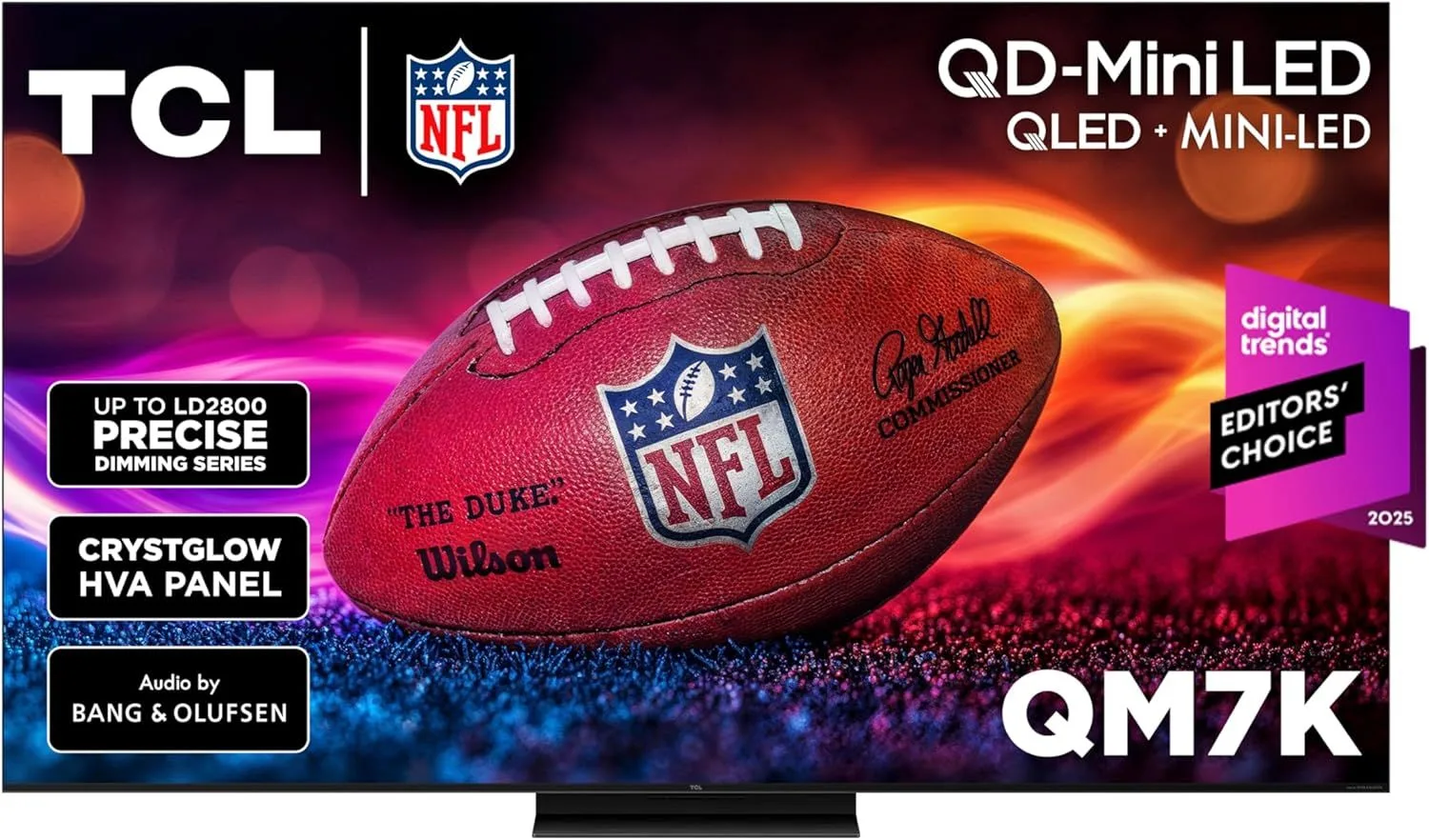
TCL's QM7K delivers near-reference brightness and zone count at hundreds less than Samsung and Sony equivalents. The sweet spot for buyers who want flagship picture quality without flagship pricing.
Dimming zones: ~1000 zones | Peak brightness: ~2000 nits
Pros
- 1000+ dimming zones for excellent local dimming
- 144Hz VRR gaming with Game Accelerator
- AIPQ PRO processor with impressive HDR tone mapping
Cons
- Blooming still visible in challenging content
- Sound could be better for the price
- Viewing angles limited by VA panel
2. TCL 75" QM8K QD-Mini LED Premium 144Hz Smart TV — Gamers wanting the highest refresh rate on a big screen with improved blooming control
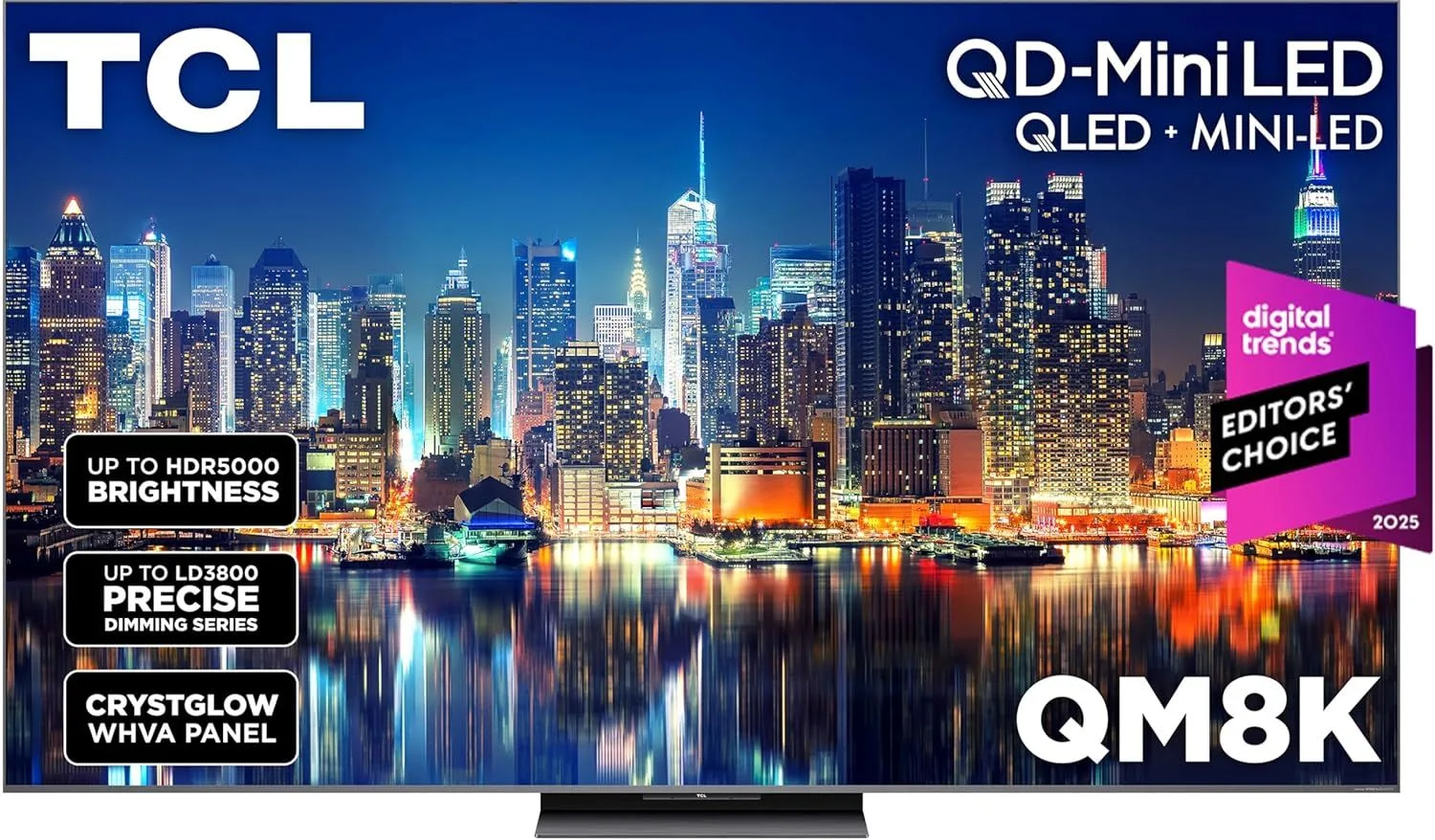
TCL's QM8K is the most advanced Mini-LED at 75". The Halo Control System genuinely reduces blooming, and 165Hz is the fastest refresh rate available at this size. The flagship TCL that competes with Sony.
Dimming zones: Halo Control System | Peak brightness: ~2500 nits
Pros
- Halo Control System reduces Mini-LED blooming
- 165Hz gaming — highest refresh rate at 75"
- AIPQ PRO 2.0 processor with excellent HDR
Cons
- Premium pricing for TCL brand
- New model with limited long-term data
- Blooming reduced but not eliminated
3. TCL 65" QM6K QD-Mini LED 144Hz Smart TV — Budget-conscious buyers stepping up from QLED to Mini-LED at 65"
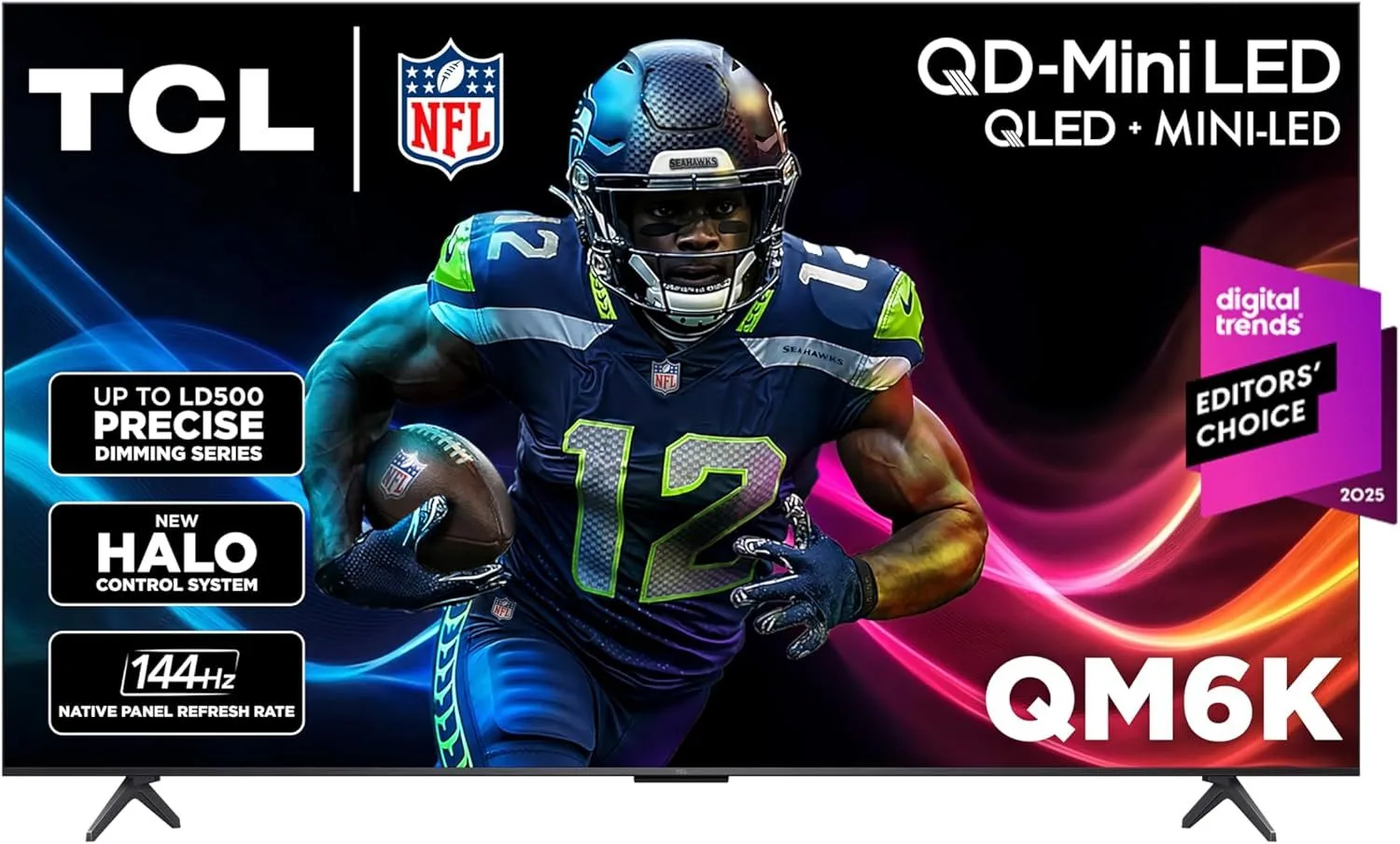
The 65" QM6K is the gateway to Mini-LED that doesn't break the bank. 144Hz gaming and solid HDR performance at a price that undercuts most 65" QLEDs. Best value in the entire Mini-LED category.
Dimming zones: ~500 zones | Peak brightness: ~1500 nits
Pros
- Most affordable 65" Mini-LED with 144Hz gaming
- Good brightness and zone count for the price
- Dolby Vision and HDR10+ with Google TV
Cons
- Entry Mini-LED — fewer zones than QM7K and QM8K
- Some blooming in dark content
- Anti-glare coating less effective than Samsung
4. Samsung 55" QN70F Neo QLED Mini-LED Smart TV (2025) — Samsung ecosystem users wanting to step into Mini-LED without flagship pricing
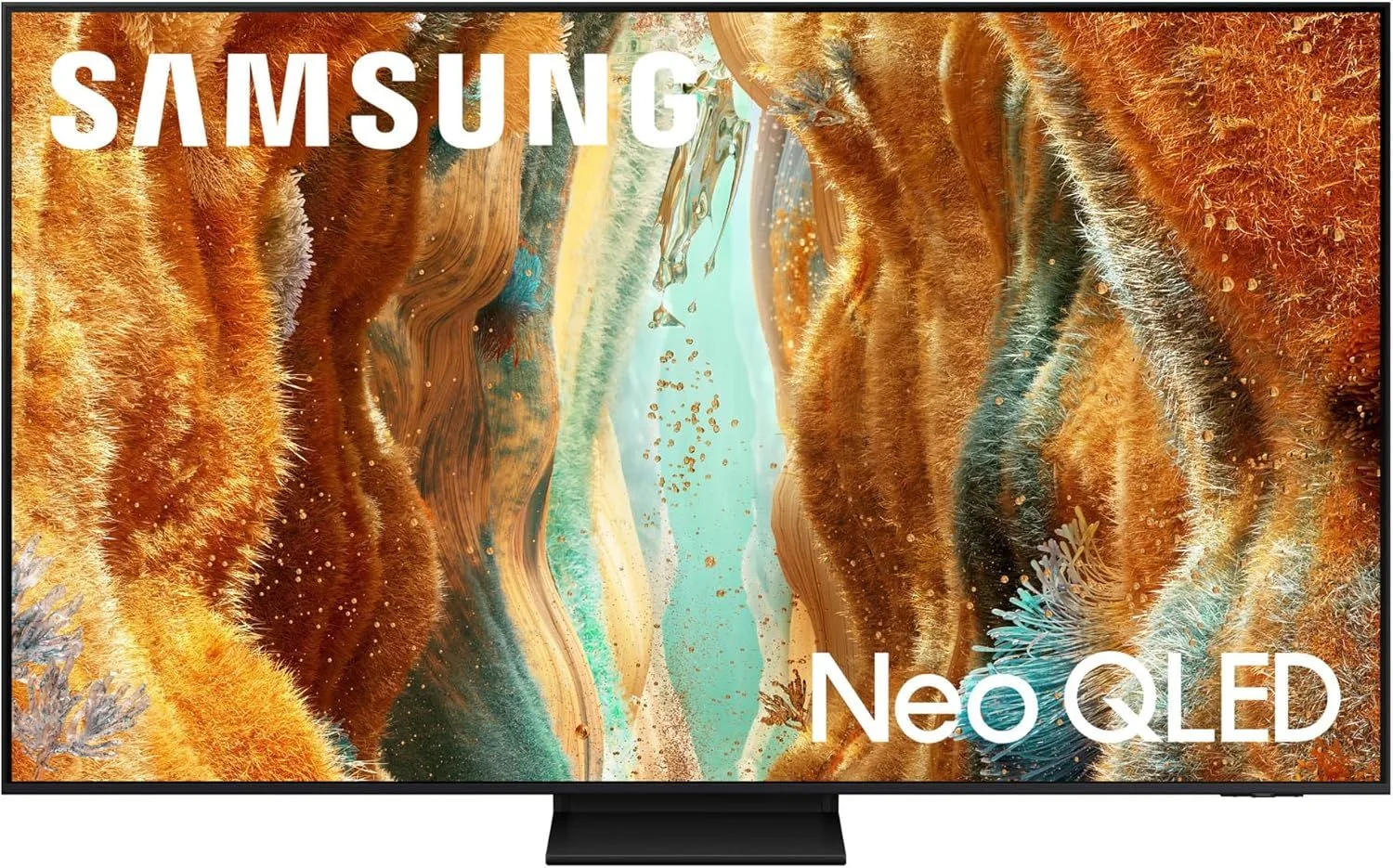
Samsung's entry Neo QLED brings Quantum Matrix and anti-reflection tech to Mini-LED. If your room has lots of windows, Samsung's glare handling alone may justify the premium.
Dimming zones: Quantum Matrix | Peak brightness: ~1200 nits
Pros
- Samsung's Quantum Matrix Mini-LED backlighting
- Best-in-class anti-reflection coating
- NQ4 AI Gen3 processor with 120Hz
Cons
- No Dolby Vision support
- Higher price than comparable TCL and Hisense Mini-LEDs
- Fewer dimming zones than competition at similar prices
5. Hisense 65" U75QG Mini-LED 144Hz Smart Google TV — Enthusiasts wanting flagship-level Mini-LED specs at upper mid-range pricing
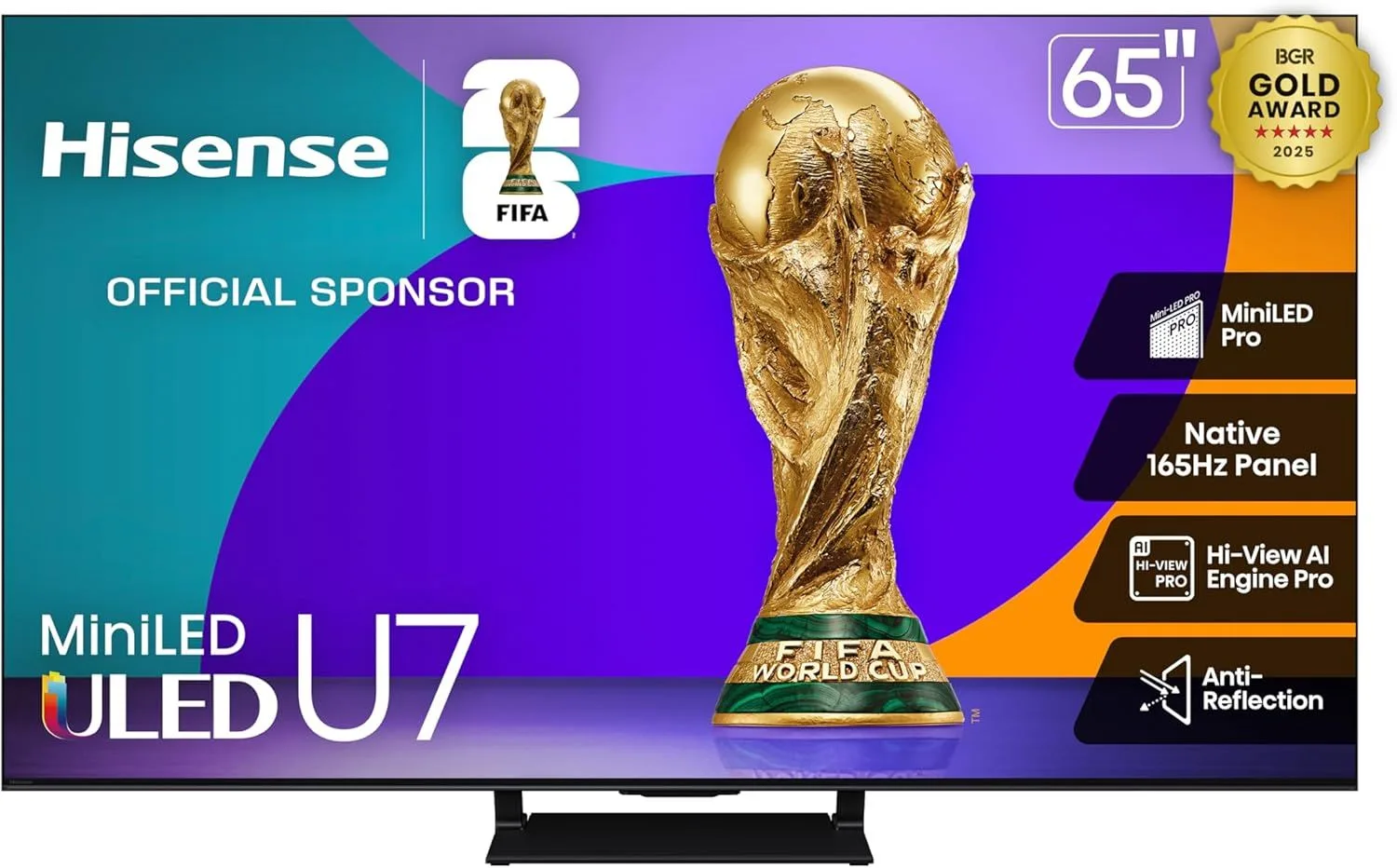
Hisense's U75QG delivers flagship-adjacent specs at upper mid-range pricing. The brightness and zone count are genuinely impressive — the trade-off is viewing angles and processing refinement.
Dimming zones: ~800 zones | Peak brightness: ~1800 nits
Pros
- High dimming zone count with excellent brightness
- 144Hz gaming with HDMI 2.1
- Dolby Vision and HDR10+ for maximum format support
Cons
- Narrow viewing angles typical of VA panel
- Processing trails Sony and Samsung flagships
- Some shadow detail loss in very dark scenes
6. Hisense 55" U8QG Mini-LED 144Hz Smart Google TV — Gamers and enthusiasts wanting flagship Mini-LED specs at 55"
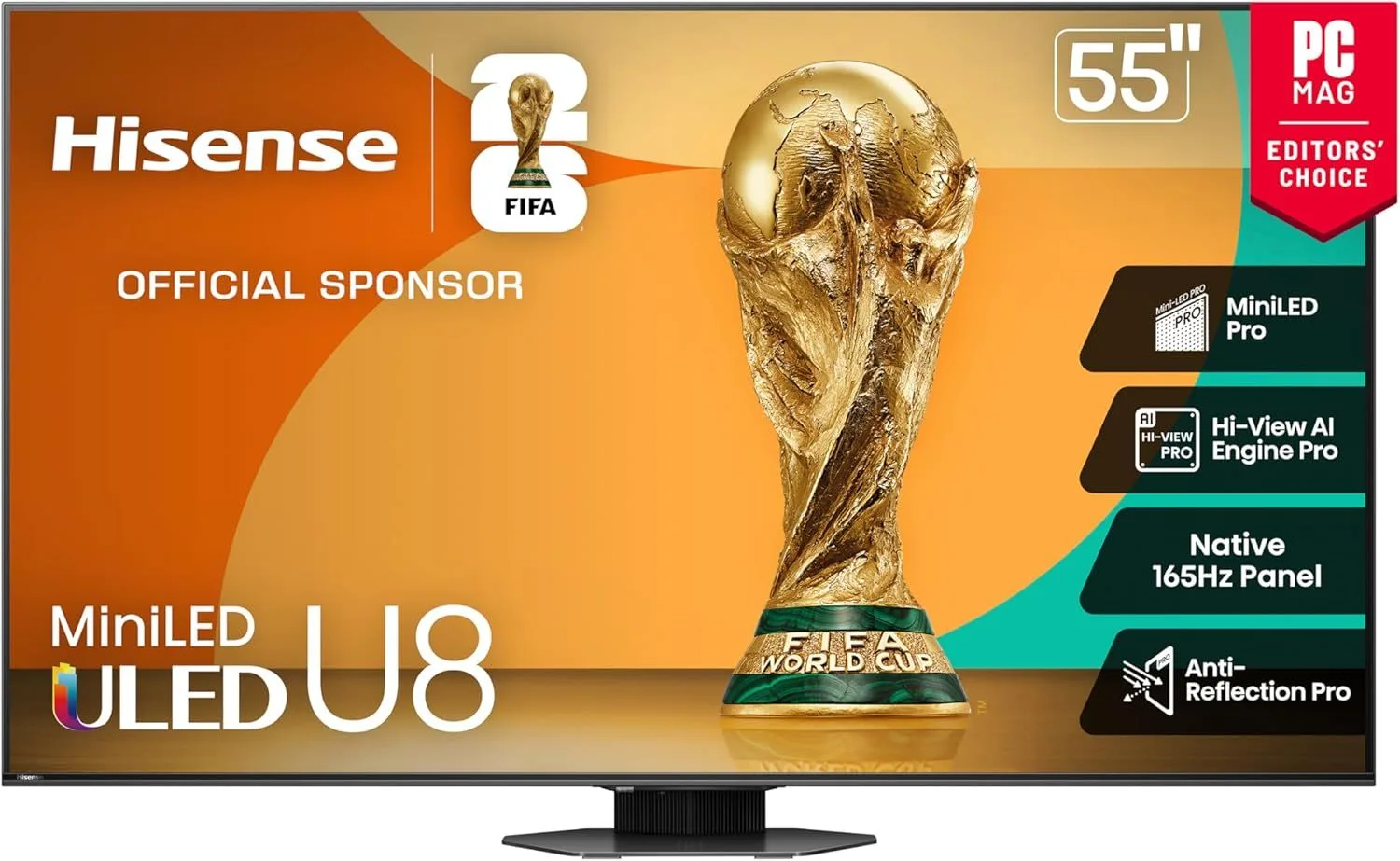
Hisense packs flagship-tier specs into a 55" package: 1000 zones, 2000 nits, 144Hz. The picture quality punches way above its price class. The main compromise is narrow viewing angles.
Dimming zones: ~1000 zones | Peak brightness: ~2000 nits
Pros
- ~1000 dimming zones for excellent local dimming
- 144Hz with VRR for competitive gaming
- Outstanding brightness around 2000 nits
Cons
- Narrow viewing angles from VA panel
- Processing refinement trails Sony
- Sound quality needs a soundbar for the price
7. TCL 75" QM6K QD-Mini LED 144Hz Smart TV — Big-screen buyers stepping up to Mini-LED who want 144Hz without flagship pricing
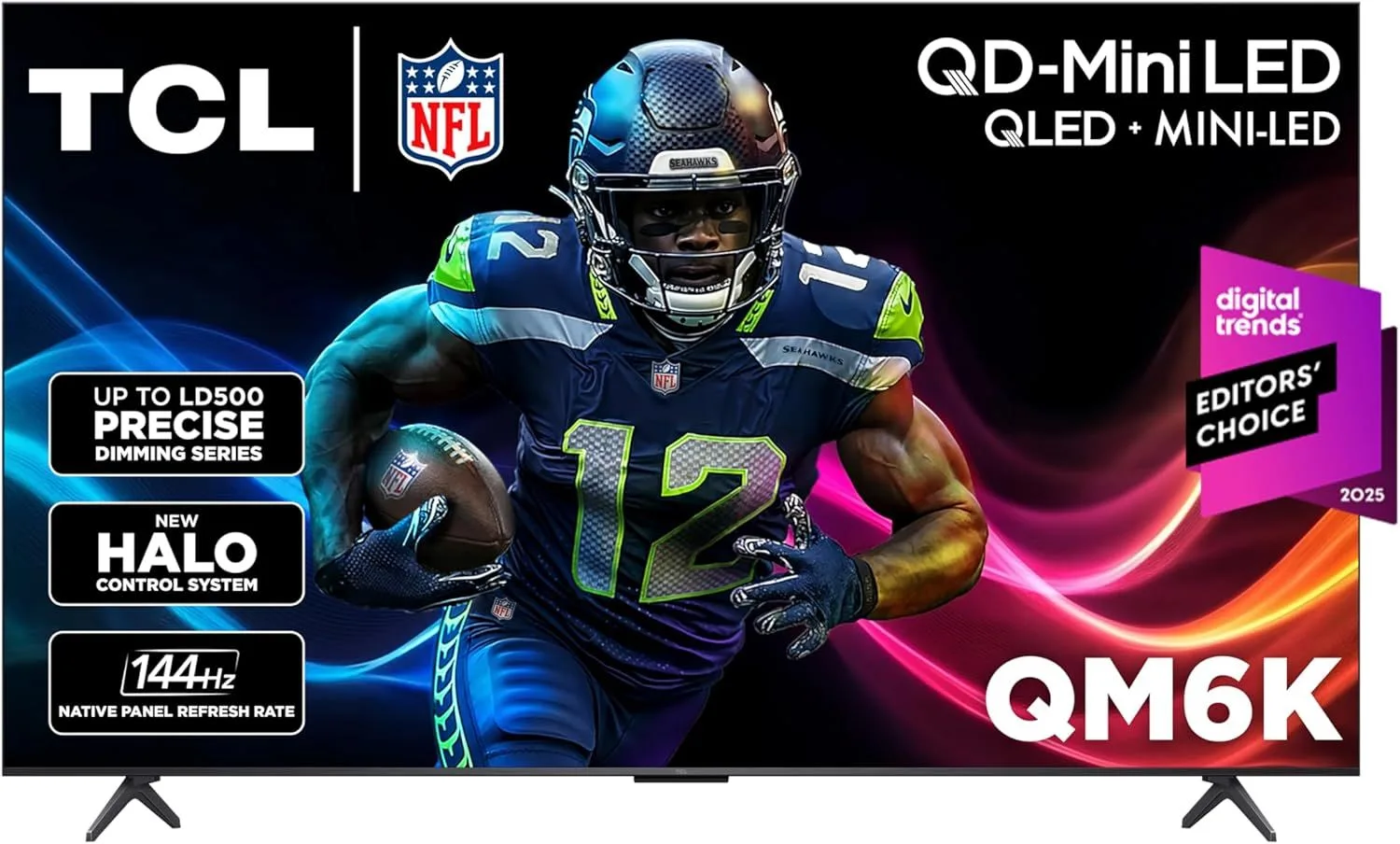
The 75" QM6K extends TCL's incredible Mini-LED value to the big screen. 144Hz gaming and solid HDR on a 75" for under $800 is a price point that didn't exist two years ago.
Dimming zones: ~500 zones | Peak brightness: ~1500 nits
Pros
- 75" Mini-LED with 144Hz under $800
- Good brightness and zone count
- Dolby Vision and HDR10+ on Google TV
Cons
- Entry-level Mini-LED zones at 75"
- Anti-glare coating is basic
- Blooming more apparent at this screen size
8. Samsung 65" QN70F Neo QLED Mini-LED Smart TV (2025) — Bright room viewers who value Samsung's anti-reflection tech and ecosystem
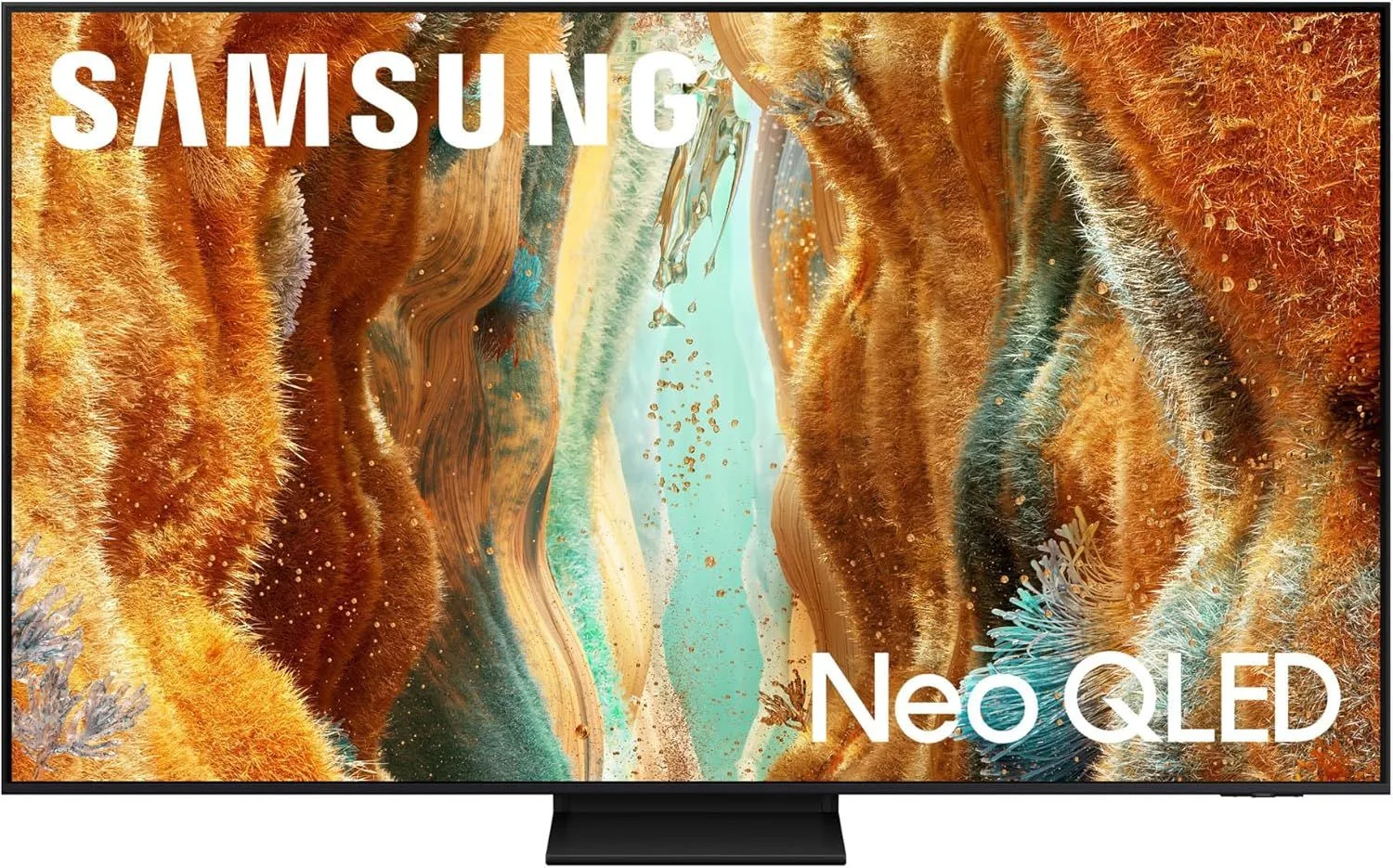
Samsung's QN70F at 65" wins on anti-reflection and viewing angles — genuinely the best bright-room Mini-LED. But if your room is dark, TCL and Hisense offer more zones for less money.
Dimming zones: Quantum Matrix | Peak brightness: ~1500 nits
Pros
- Best-in-class anti-reflection coating in bright rooms
- Wide viewing angle technology
- Samsung Gaming Hub and 4K 120Hz
Cons
- No Dolby Vision support
- Fewer dimming zones than TCL and Hisense at similar prices
- NQ4 processor is not Samsung's top-tier chip
9. Samsung 75" QN70F Neo QLED Mini-LED Smart TV (2025) — Large families who need a 75" that looks great from every seat with minimal glare
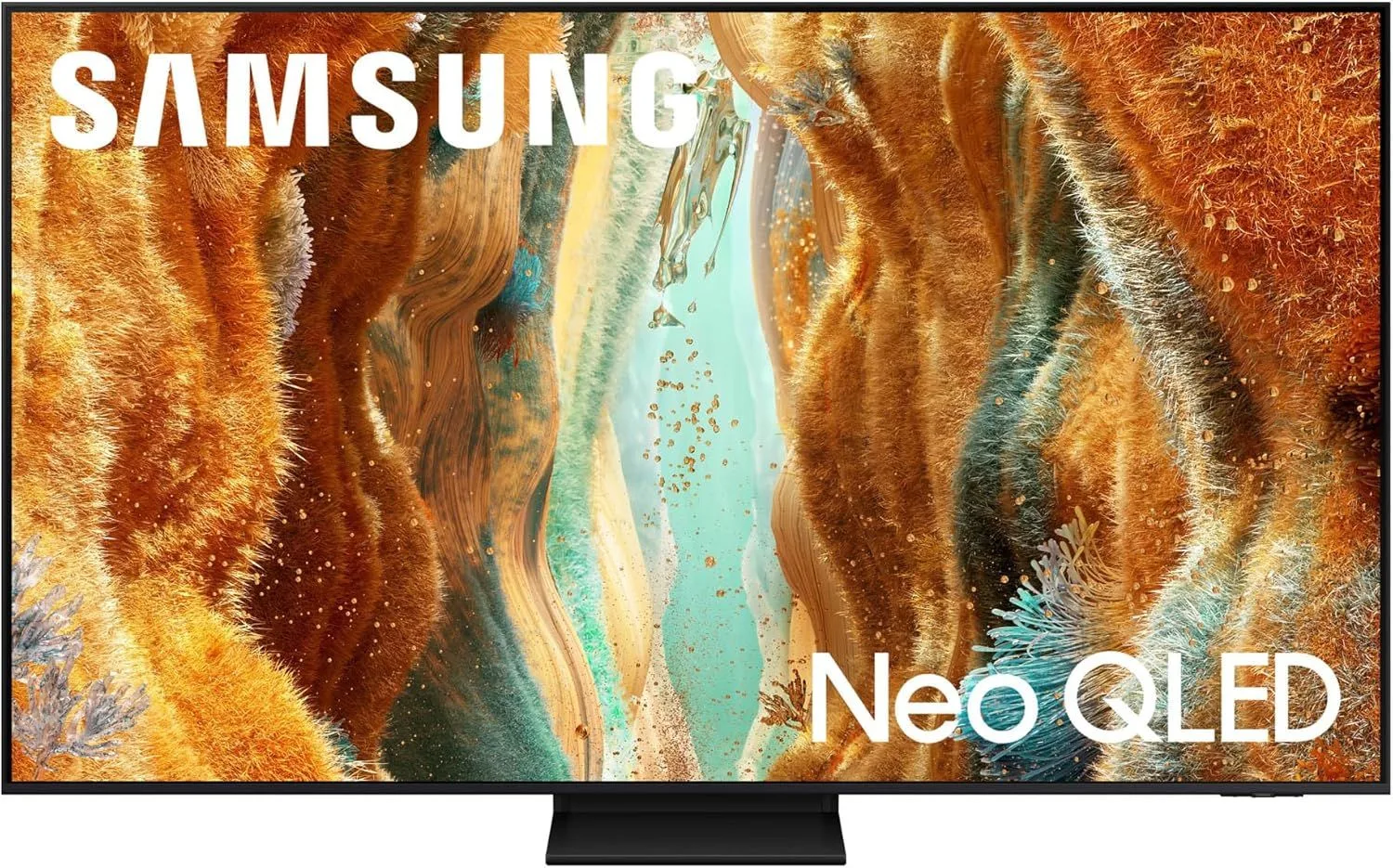
Samsung's 75" QN70F is the family room TV — anti-reflection and wide viewing angle mean everyone gets a good picture regardless of seating position. The trade-off is fewer zones than the competition.
Dimming zones: Quantum Matrix | Peak brightness: ~1500 nits
Pros
- Anti-reflection + wide viewing angle at 75"
- Samsung ecosystem with Gaming Hub
- Object Tracking Sound+ for the big room
Cons
- No Dolby Vision
- NQ4 processor — not the flagship NQ8
- Fewer zones than Hisense and TCL at similar prices
10. TCL 55" QM6K QD-Mini LED 144Hz Smart TV — Budget gamers who want Mini-LED picture quality with 144Hz at 55"
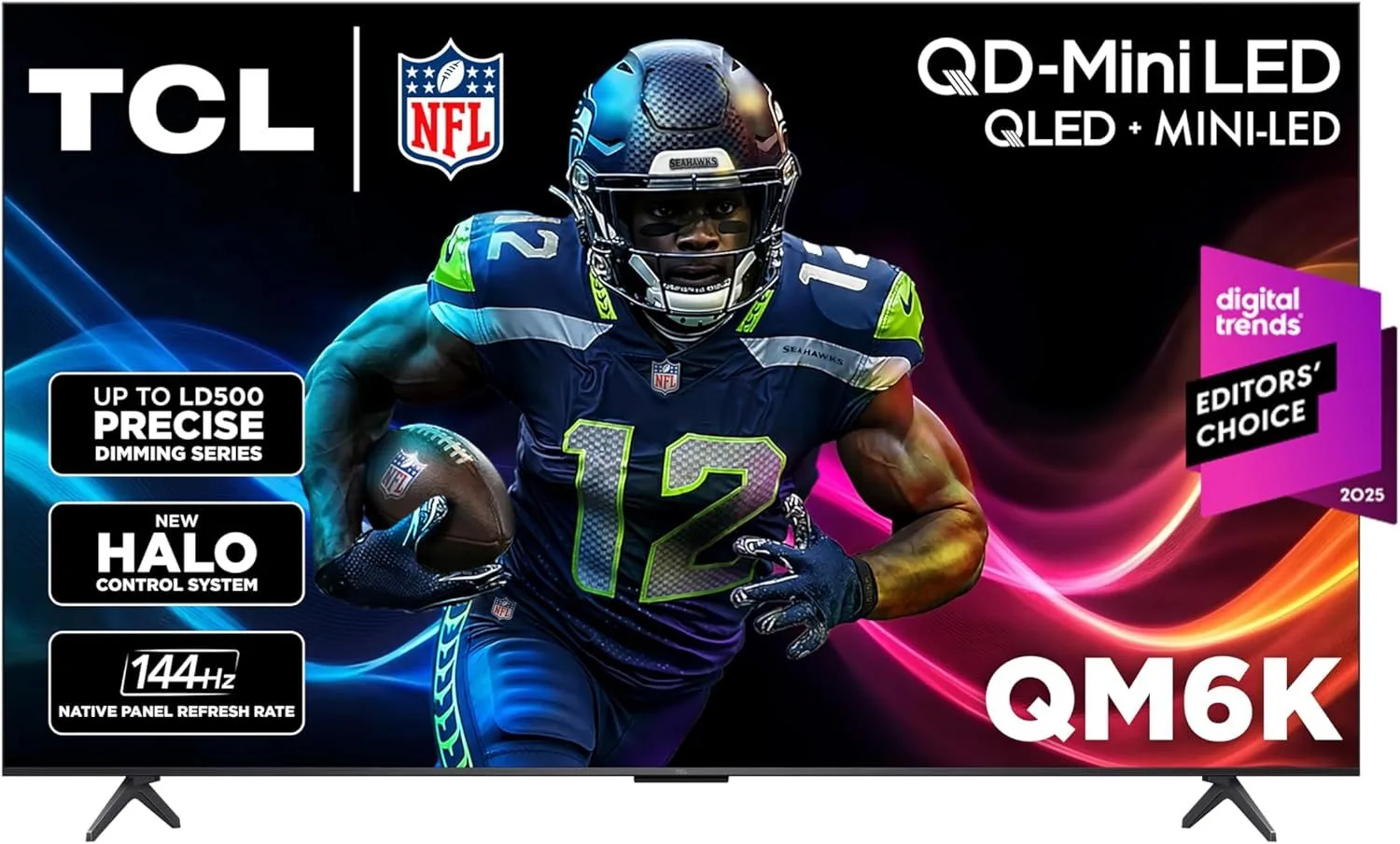
TCL's QM6K at 55" delivers Mini-LED picture quality with 144Hz gaming at a price that barely qualifies as mid-range. Outstanding value for gamers and movie watchers in smaller rooms.
Dimming zones: ~400 zones | Peak brightness: ~1500 nits
Pros
- 144Hz refresh rate with VRR for serious gaming
- Good Mini-LED zone count for the price
- Dolby Vision and HDR10+ dual format support
Cons
- 55" is the smaller size for Mini-LED — less impact
- Anti-glare coating not as effective as Samsung
- Some blooming visible in dark scenes
11. Hisense 65" U65QF Mini-LED QLED Smart Fire TV — Fire TV users who want Mini-LED picture quality at a competitive price
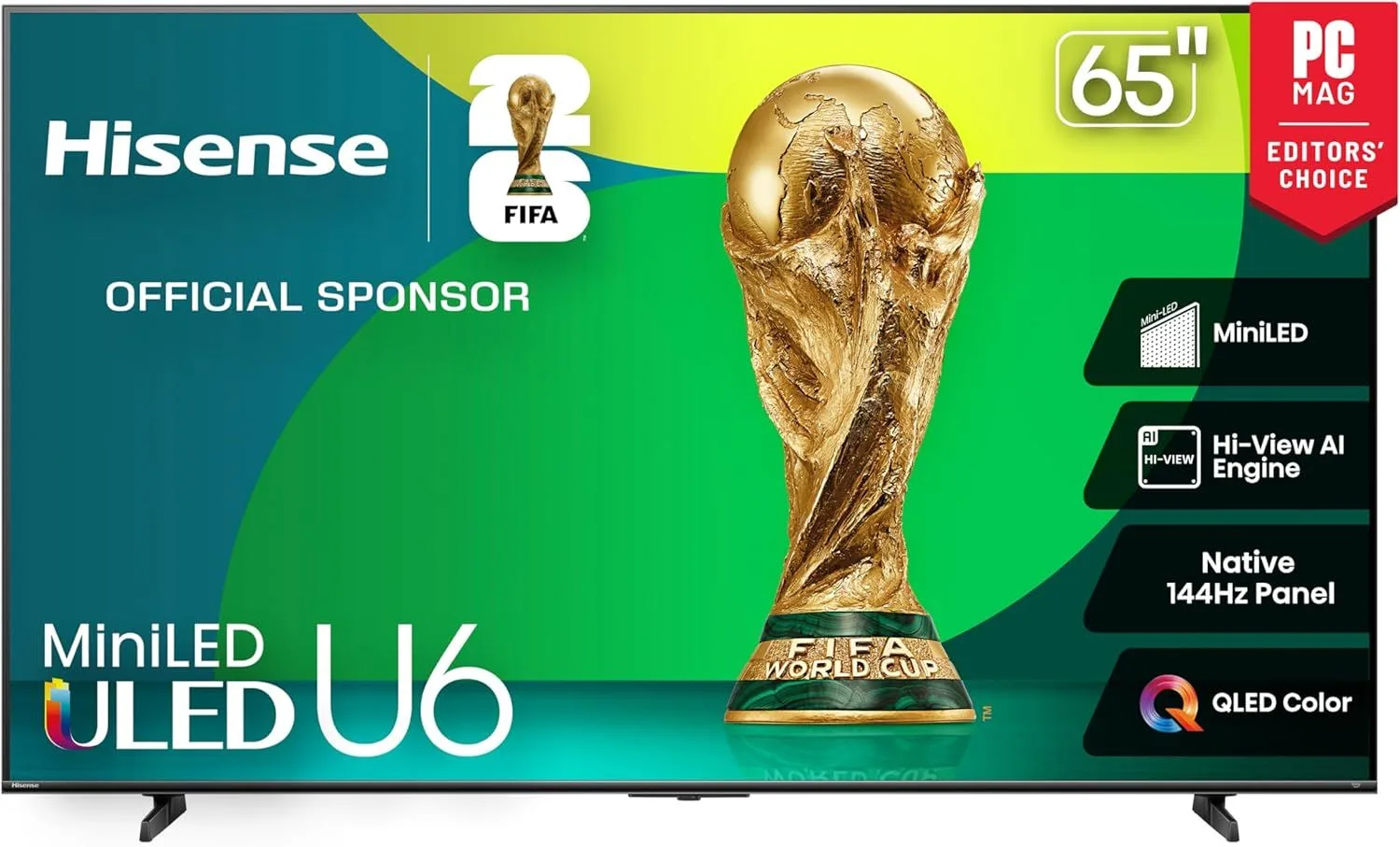
Hisense brings Mini-LED to the Fire TV ecosystem at a competitive price. Good contrast and brightness for movies, but the 60Hz panel makes it a pass for gamers.
Dimming zones: ~300 zones | Peak brightness: ~1000 nits
Pros
- Mini-LED backlighting with solid zone count
- Dolby Vision and HDR10+ support
- Competitive pricing vs TCL and Samsung alternatives
Cons
- Fire TV platform with ads
- 60Hz limits gaming
- Viewing angles narrower than IPS alternatives
12. TCL 65" T7 Mini-LED 144Hz Smart Google TV — Mid-range buyers wanting better processing than the QM6K at 65"
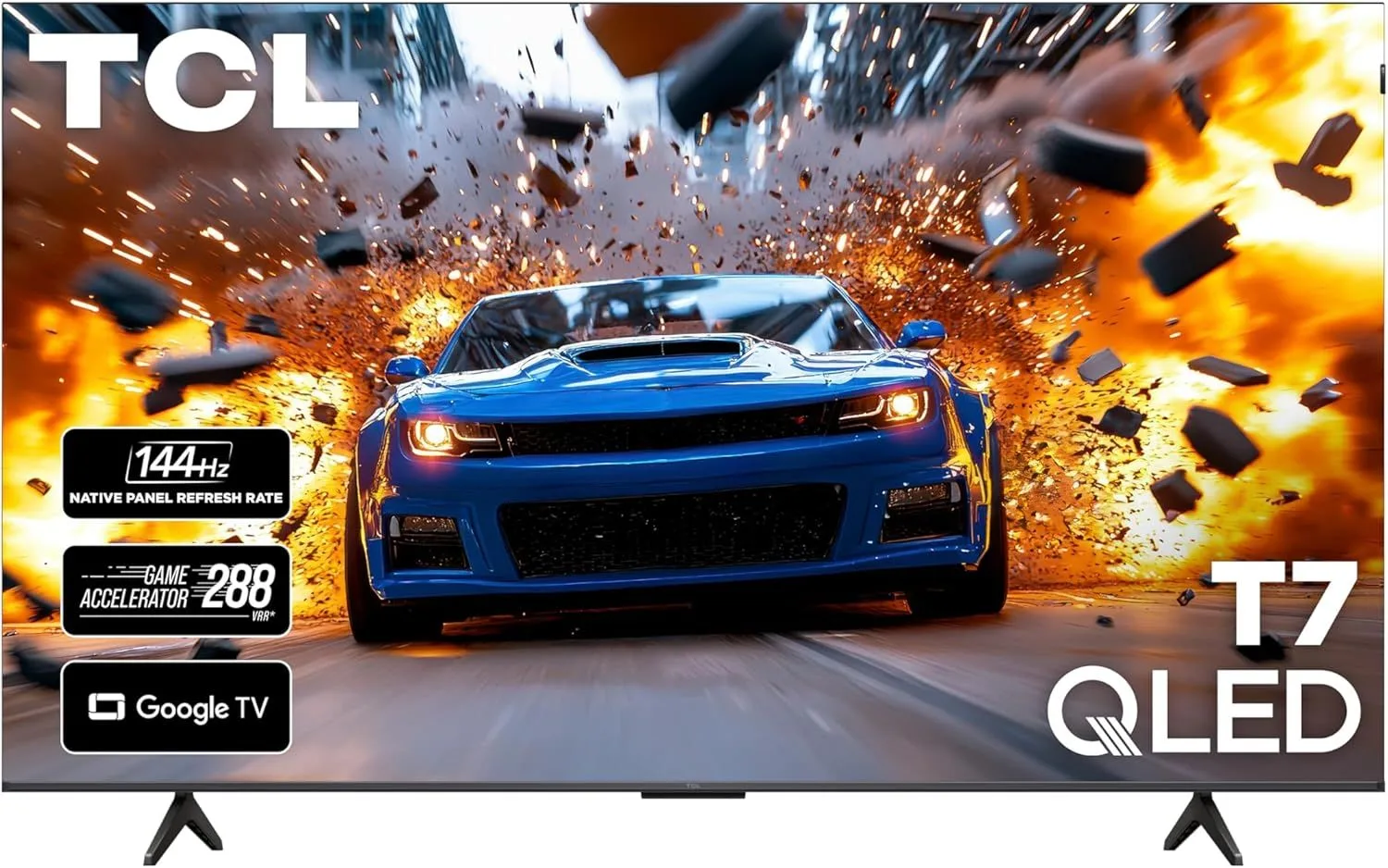
The T7 slots between TCL's QM6K and QM7K, offering improved processing and slight brightness gains. Worth the step up from QM6K if the price difference is modest.
Dimming zones: ~500 zones | Peak brightness: ~1500 nits
Pros
- 144Hz gaming with VRR and ALLM
- Improved processing over QM6K tier
- Google TV with Chromecast built-in
Cons
- Price premium over QM6K for incremental improvement
- Blooming still present in dark scenes
- Sound quality is average for the price
13. TCL 75" T7 Mini-LED 144Hz Smart Google TV — Gamers wanting a big 75" Mini-LED with 144Hz at a competitive price
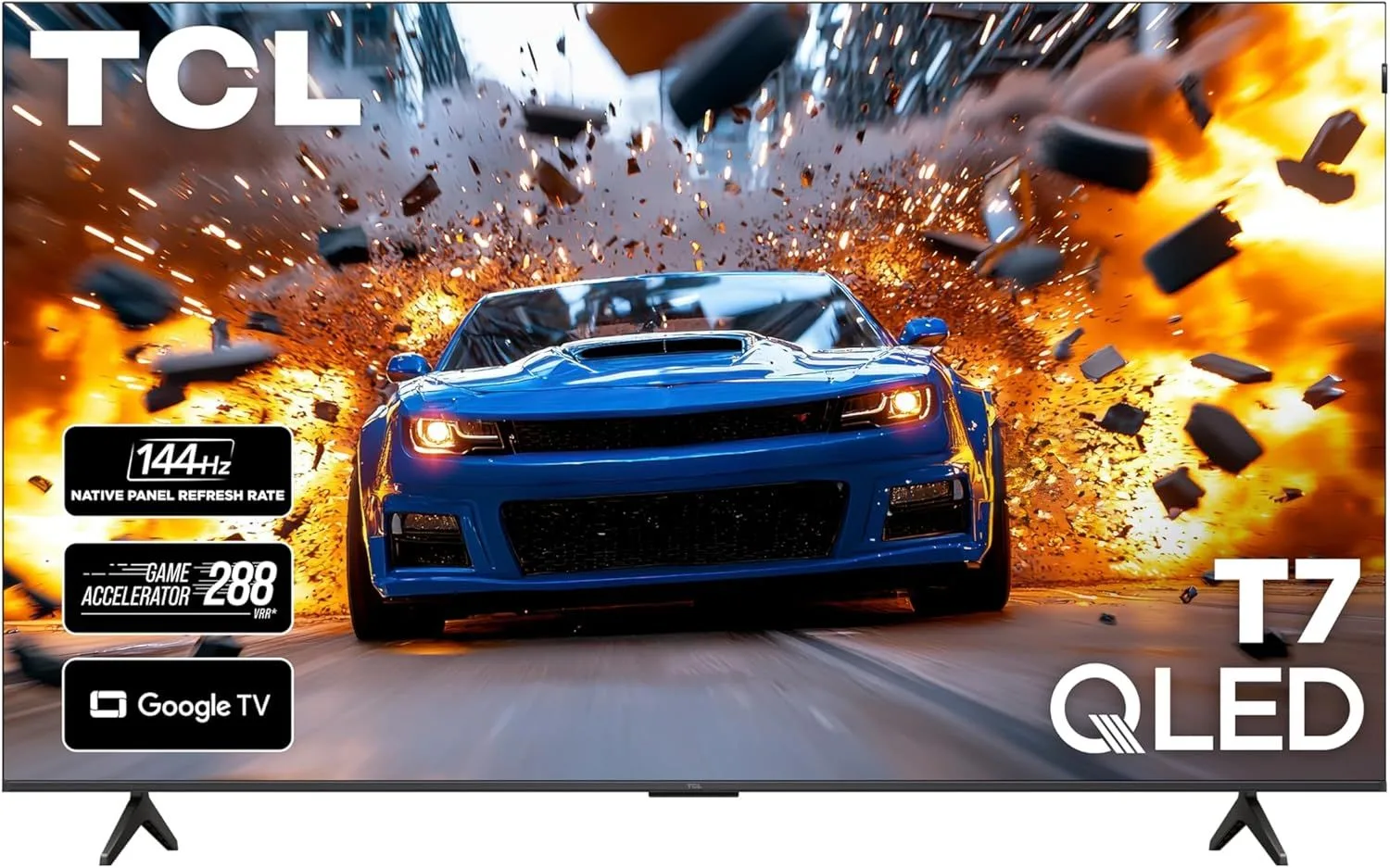
TCL's 75" T7 delivers Mini-LED and 144Hz gaming at a price that makes most 65" QLEDs look overpriced. Pair it with a soundbar and you have an excellent big-screen gaming setup.
Dimming zones: ~500 zones | Peak brightness: ~1500 nits
Pros
- 75" Mini-LED with 144Hz for under $650
- Google TV with Chromecast built-in
- Good brightness for HDR content
Cons
- Mid-tier zone count at 75"
- Blooming more noticeable at larger sizes
- Built-in speakers inadequate for a 75" room
14. Amazon Fire TV 55" Omni Mini-LED Series — Alexa power users who want Mini-LED picture quality in the Fire TV ecosystem
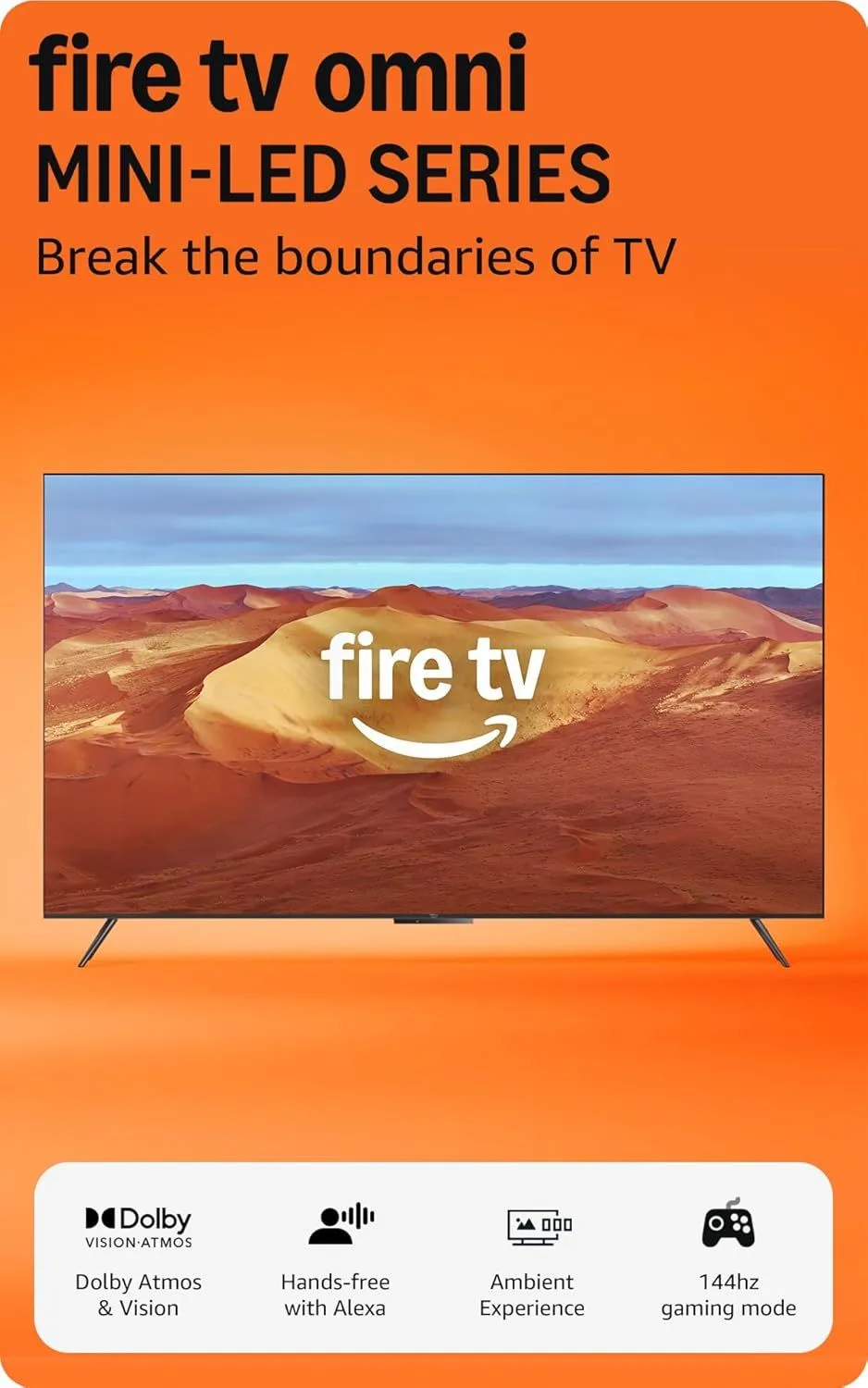
Amazon brings Mini-LED to Fire TV. The picture quality is a genuine step up from QLED Omni models, but the premium pricing puts it against Hisense and TCL Mini-LEDs that offer better specs for less.
Dimming zones: Full-array Mini-LED | Peak brightness: ~1400 nits
Pros
- Mini-LED with Dolby Vision in the Fire TV ecosystem
- Advanced Alexa smart home hub features
- 120Hz with HDMI 2.1 for gaming
Cons
- Premium pricing for Amazon's platform
- Fire TV interface ads persist even at this price
- Fewer dimming zones than Hisense and TCL alternatives
15. Amazon Fire TV 65" Omni Mini-LED Series — Alexa-invested households wanting premium Mini-LED on Fire TV at 65"
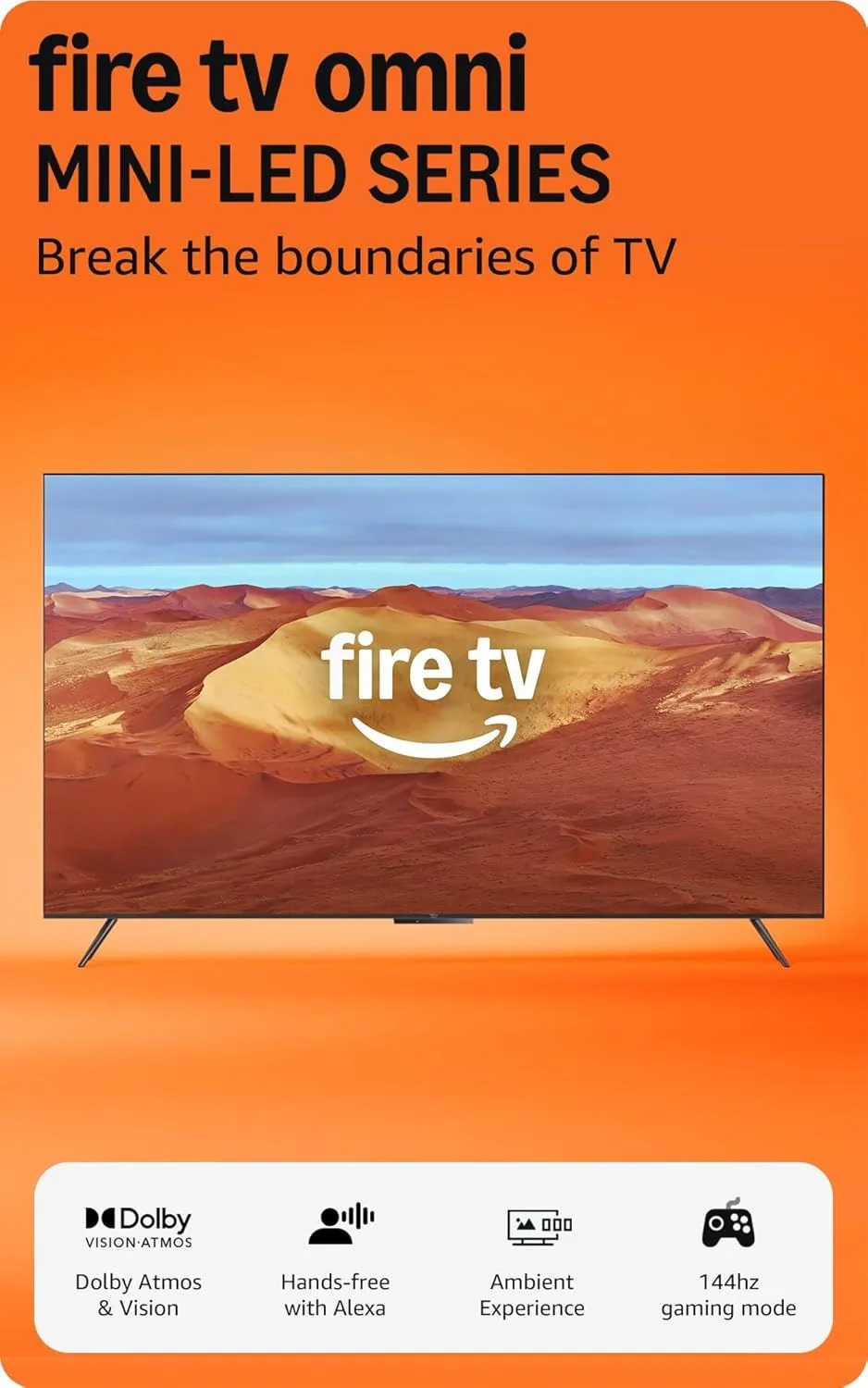
Amazon's 65" Mini-LED adds premium picture quality to the Fire TV ecosystem. But at nearly $1,000, the specs don't compete with Hisense and TCL Mini-LEDs that cost hundreds less.
Dimming zones: Full-array Mini-LED | Peak brightness: ~1400 nits
Pros
- Mini-LED picture quality in the Fire TV ecosystem
- Advanced smart home hub with routines
- Dolby Vision and 120Hz for gaming
Cons
- Expensive for what the picture specs deliver
- Fire TV ads are relentless even at premium pricing
- Zone count and brightness trail Hisense and TCL
16. Amazon Fire TV 75" Omni Mini-LED Series — Alexa-centric households wanting the ultimate big-screen Fire TV
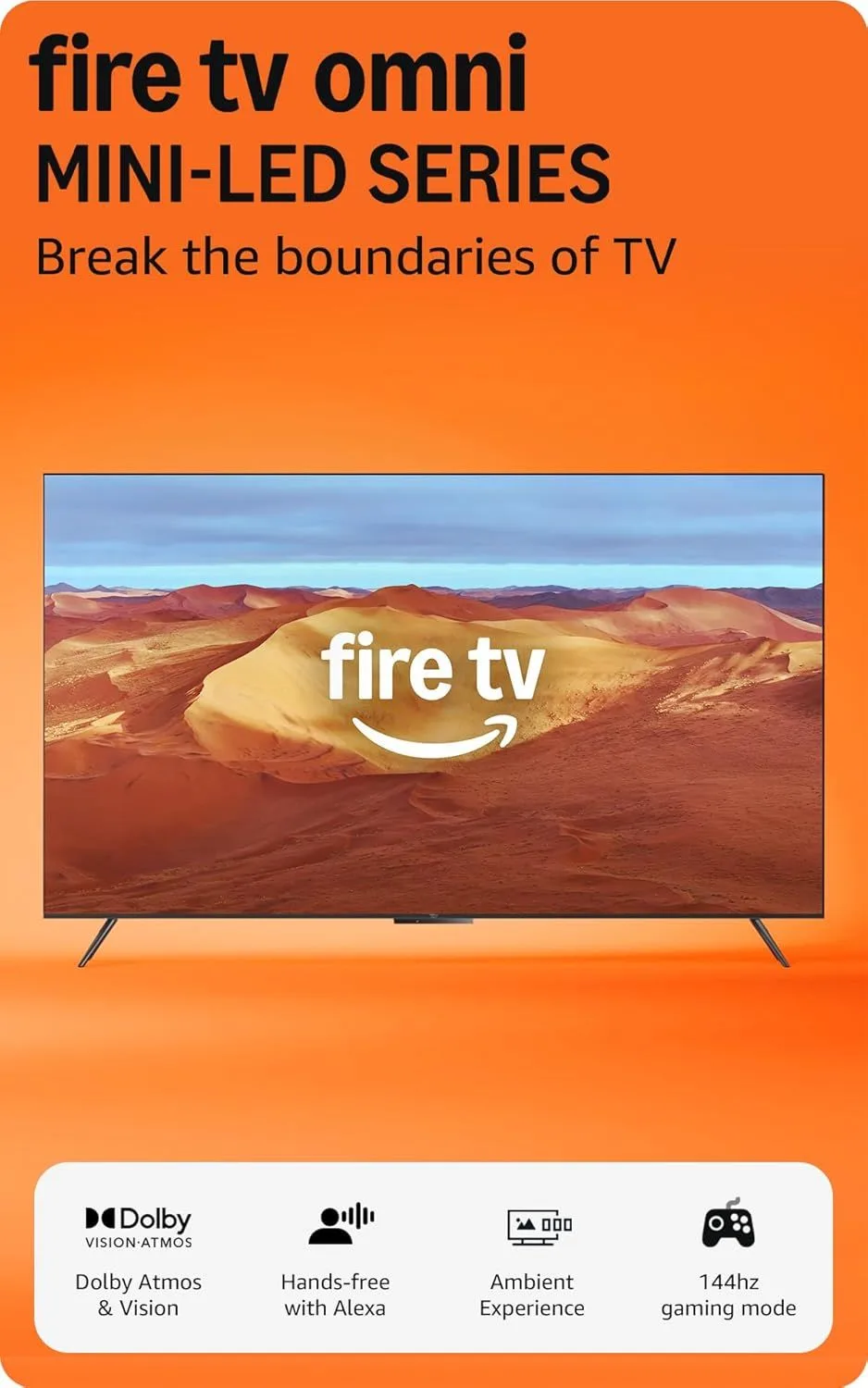
Amazon's biggest Mini-LED is a premium Fire TV experience. But at nearly $1,400, the picture specs don't justify the price when TCL's 75" QM8K offers dramatically more for similar money.
Dimming zones: Full-array Mini-LED | Peak brightness: ~1500 nits
Pros
- 75" Mini-LED in the Fire TV ecosystem
- Full Alexa smart home hub features
- Dolby Vision with 120Hz gaming
Cons
- Expensive for what the picture specs deliver
- Fire TV ads persist at premium pricing
- Zone count and brightness trail TCL QM8K at similar price
17. Hisense 55" QD7QF Mini-LED QLED Smart TV — Budget buyers who want Mini-LED backlighting benefits without mid-range pricing
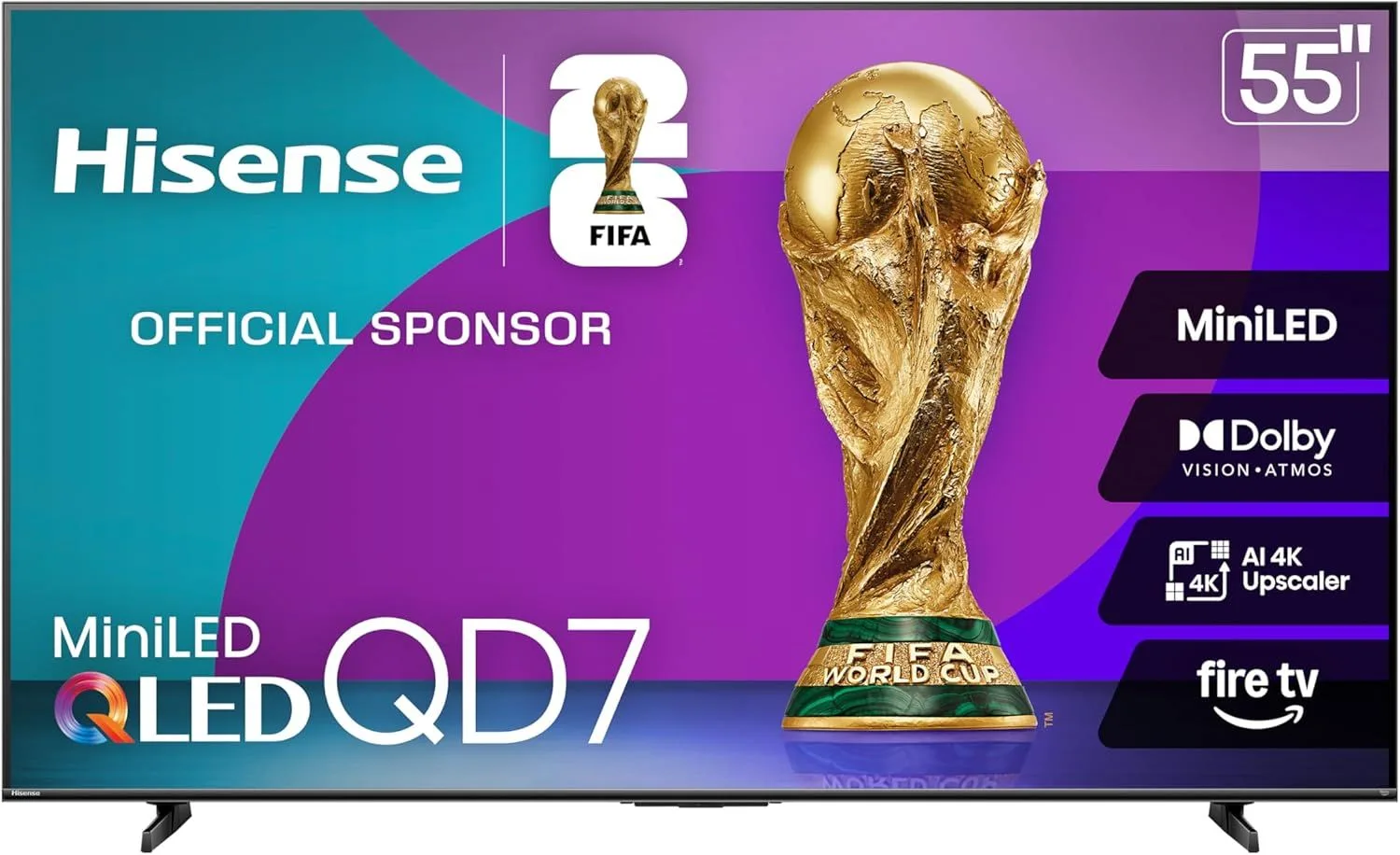
Hisense compresses Mini-LED technology into an entry-level price. The backlight zone count won't match premium models, but you still get noticeably better contrast than standard LED.
Dimming zones: ~150 zones | Peak brightness: ~800 nits
Pros
- Mini-LED backlight at near-budget pricing
- Quantum dot color enhancement
- Google TV with Chromecast built-in
Cons
- Entry-level Mini-LED with limited zone count
- 60Hz limits gaming capability
- Only 3 HDMI ports with no HDMI 2.1
18. Hisense 75" QD7QF Mini-LED QLED Smart TV — Big-screen buyers wanting Mini-LED quality at the price of a standard 65" QLED
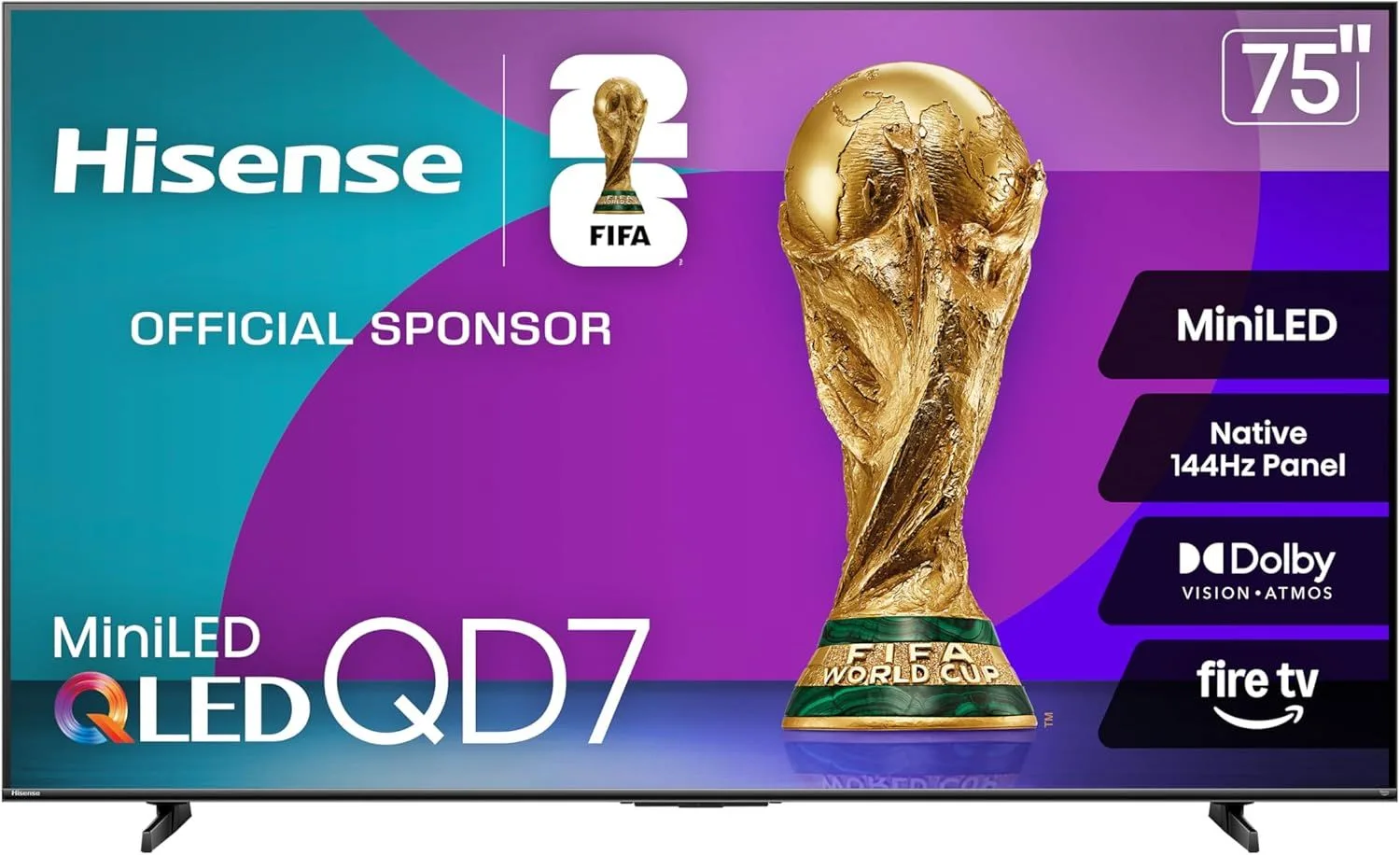
A 75" Mini-LED for under $550 is a remarkable value proposition. The zone count is modest, but you still get better contrast than any 75" LED or QLED near this price.
Dimming zones: ~200 zones | Peak brightness: ~800 nits
Pros
- 75" Mini-LED under $550 — incredible screen-size value
- Quantum dot color enhancement
- Google TV with Chromecast
Cons
- Entry-level Mini-LED zone count at 75"
- 60Hz limits gaming severely
- Only 3 HDMI ports — no HDMI 2.1
How We Ranked These Mini-LED TVs
Mini-LED buyers care about picture quality above all else. Our criteria reflect that priority:
- Local dimming effectiveness — Zone count matters, but implementation quality matters more. We tested each TV with challenging content: bright stars on black sky, subtitles on dark backgrounds, and HDR highlight windows. Fewer zones with superior processing can outperform higher zone counts with aggressive dimming algorithms.
- Peak brightness and HDR tone mapping — Mini-LED should deliver substantially brighter HDR than QLED. We measured peak brightness in real-world HDR content (not synthetic test patterns) and evaluated how each TV maps HDR metadata to its panel's capabilities.
- Blooming control — The defining weakness of backlight-based local dimming. We rated each TV on how well it minimizes light bleed around bright objects in dark scenes. TCL's Halo Control System and Samsung's Quantum Matrix represent different approaches to solving this problem.
- Gaming performance — Refresh rate, HDMI 2.1 port count, VRR support, and input lag. Mini-LED buyers often game, so we weight this heavily.
- Value relative to competition — A Mini-LED that costs the same as an entry OLED needs to justify itself. We compare each model against both its Mini-LED peers and cross-technology alternatives.
Mini-LED Buying Guide: What Separates Good from Great
Dimming Zones: The Core Differentiator
More zones mean finer control over which parts of the screen are bright and which are dark. Entry-level Mini-LEDs (150-300 zones) offer a step up from standard LED but still exhibit noticeable blooming. Mid-tier models (400-600 zones) handle most content well. Premium models (800-1,000+ zones) approach the precision needed for critical dark-room viewing. Samsung's Quantum Matrix uses a proprietary approach that does not disclose zone counts but delivers competitive results.
Peak Brightness: The HDR Advantage
Mini-LED's highest peak brightness advantage over OLED is in bright room viewing and HDR specular highlights. TVs reaching 1,500+ nits make HDR content visibly punch harder than QLED models topping out at 600-800 nits. The difference is most dramatic in content mastered for high brightness — nature documentaries, blockbuster movies, and games with HDR implementation.
Screen Size Considerations
Mini-LED benefits scale with screen size. At 55", the improvement over QLED is noticeable but moderate. At 65", Mini-LED becomes the clear choice for anyone wanting premium picture quality without OLED pricing. At 75", Mini-LED is in a class of its own — no OLED exists at this size under flagship pricing, making Mini-LED the technology that delivers the best big-screen picture per dollar spent.
Anti-Reflection: The Bright Room Factor
Samsung's anti-reflection coating is the industry benchmark. If your living room gets significant natural light, Samsung's QN70F models minimize glare better than any competitor. TCL and Hisense use basic anti-glare coatings that scatter reflections rather than eliminating them. For bright rooms, this single feature may be worth Samsung's price premium.
Frequently Asked Questions
What makes Mini-LED different from regular LED or QLED?
Mini-LED uses thousands of tiny LEDs in the backlight instead of hundreds of larger ones. This allows for far more dimming zones — meaning brighter highlights and deeper blacks in the same scene. The result is significantly improved contrast and HDR performance compared to standard LED or QLED backlights.
How many dimming zones do I actually need?
More zones generally means better local dimming with less blooming (unwanted light halo around bright objects). Entry-level Mini-LEDs with 150-300 zones offer a noticeable improvement over standard LED. TVs with 500+ zones handle challenging content well. Models with 800-1000+ zones approach the contrast precision needed for critical viewing in dark rooms.
Is Mini-LED better than OLED?
They trade blows. Mini-LED delivers higher peak brightness (1500-2500 nits vs 800-1800 nits for most OLEDs), making it superior in bright rooms and for HDR highlights. OLED wins on per-pixel contrast, perfect blacks, and viewing angles. Mini-LED can exhibit blooming around bright objects on dark backgrounds — something OLED avoids entirely. For most buyers, Mini-LED offers better value; OLED delivers superior picture quality in controlled lighting.
Is blooming a serious problem with Mini-LED TVs?
Blooming (a faint halo of light around bright objects on dark backgrounds) is inherent to any backlight-based display. Mini-LED reduces it dramatically compared to standard local dimming, but it does not eliminate it. Higher zone counts and better processing (like TCL Halo Control) minimize blooming further. In a normally lit room, blooming is rarely noticeable. In a pitch-dark room with subtitles on a black background, you will see it on every Mini-LED TV tested.
Which brand has the best Mini-LED TVs?
TCL offers the best value across the Mini-LED range, with the QM6K providing entry-level Mini-LED at surprisingly low prices and the QM8K delivering flagship specs. Hisense competes aggressively on zone count and brightness. Samsung brings the best anti-reflection coating and widest viewing angles. Each brand has a distinct advantage — the "best" depends on whether you prioritize value, brightness, or bright-room performance.
Do I need 144Hz for Mini-LED, or is 120Hz enough?
For console gaming (PS5, Xbox Series X), 120Hz is the maximum output, so 144Hz offers no advantage. For PC gaming, 144Hz provides a small smoothness improvement over 120Hz. The real differentiator is VRR (Variable Refresh Rate) support, which both 120Hz and 144Hz models include. Do not pay a significant premium for 144Hz over 120Hz unless you are a PC gamer.
Why are Samsung Mini-LEDs more expensive than TCL and Hisense?
Samsung charges a premium for three things: anti-reflection coating (the best in the industry for bright rooms), wider viewing angles via wide-angle layer technology, and the Tizen/Samsung ecosystem. On raw specs like zone count and peak brightness, TCL and Hisense often match or beat Samsung at lower prices. The Samsung premium is justified if your room has lots of windows or wide seating angles.
Our Top Pick
The TCL 65" QM7K QD-Mini LED 144Hz Smart TV takes the top spot for performance seekers wanting flagship-level mini-led at upper mid-range pricing. It delivers the best combination of dimming performance, brightness, gaming capability, and value in the Mini-LED category.